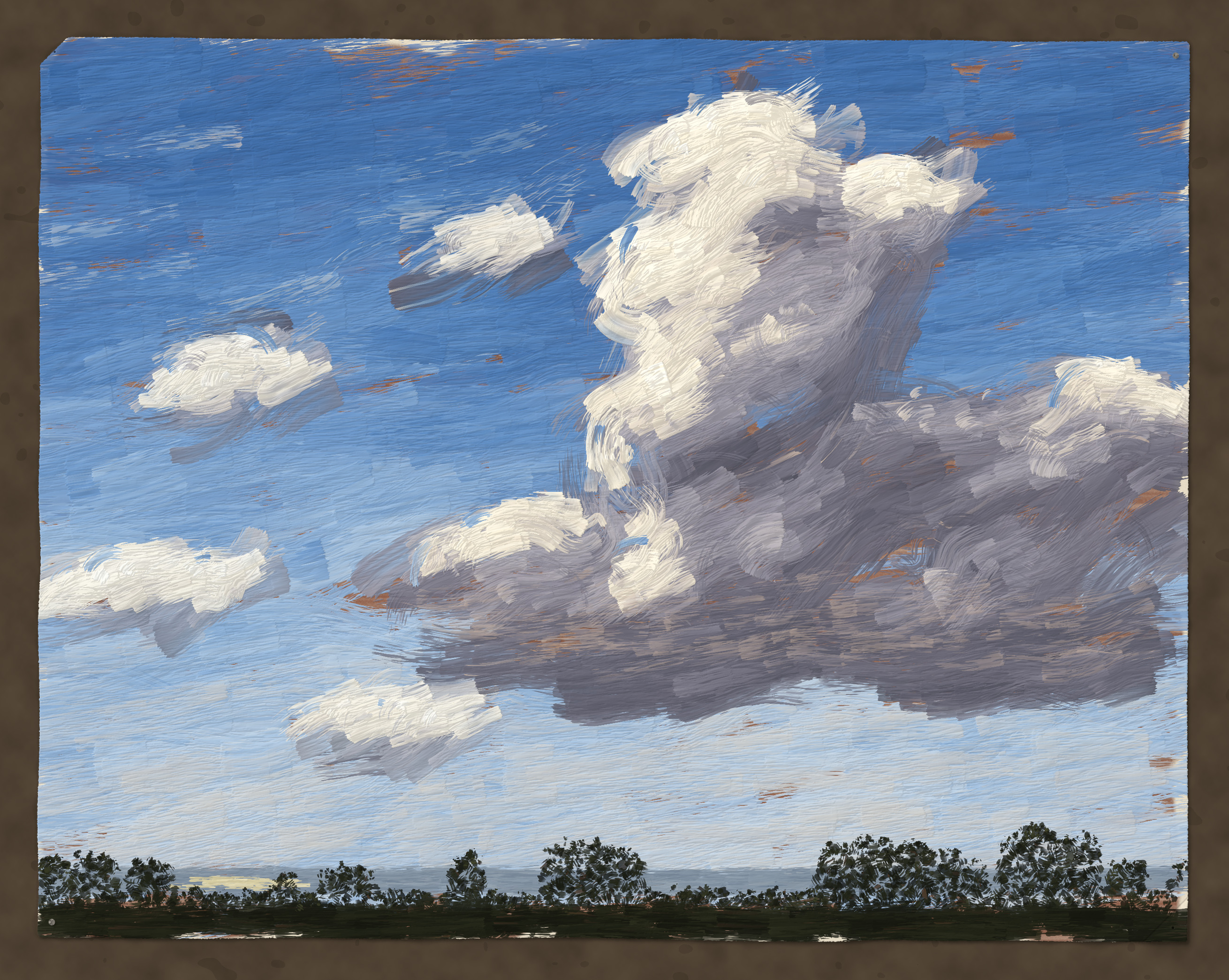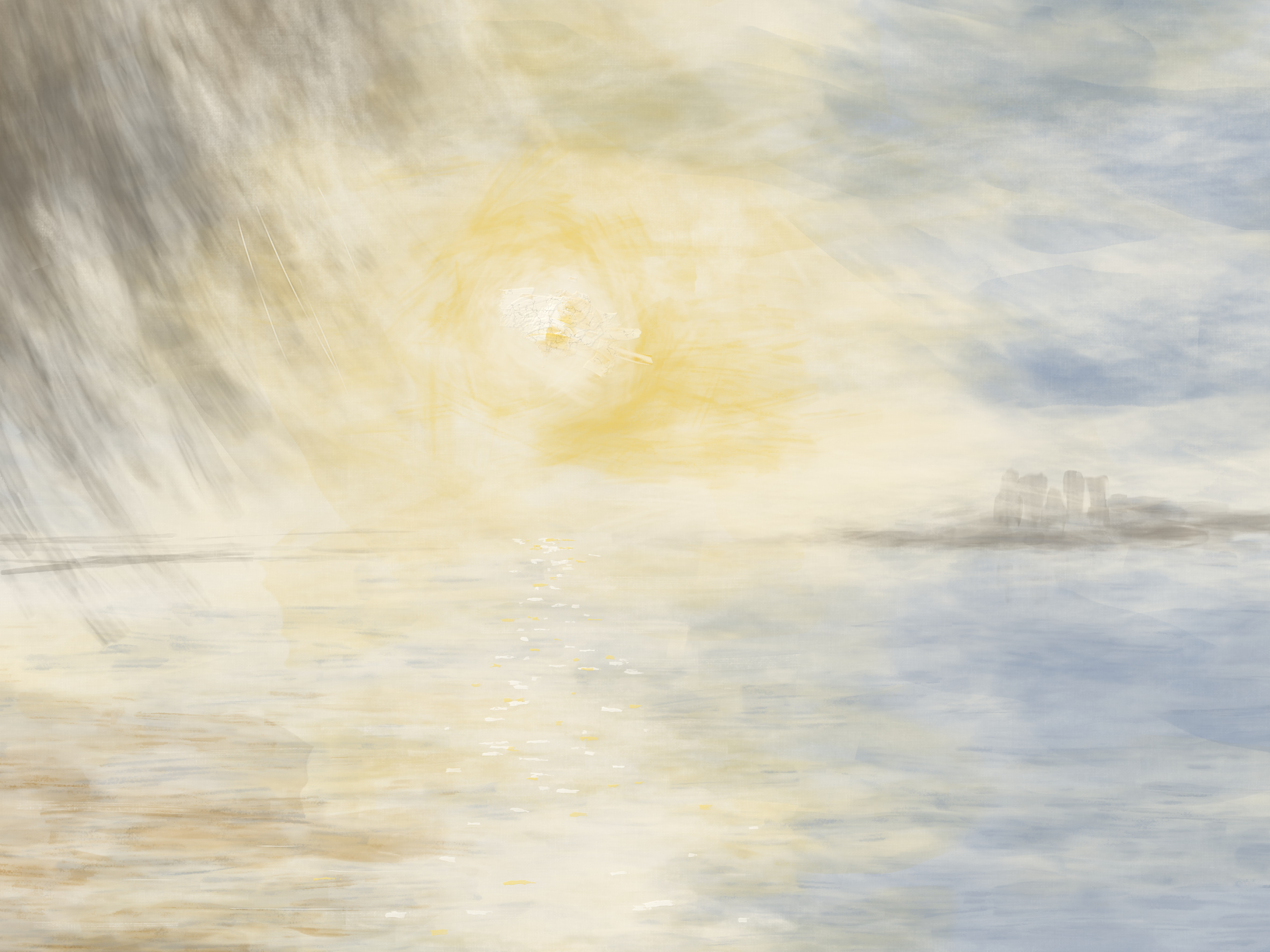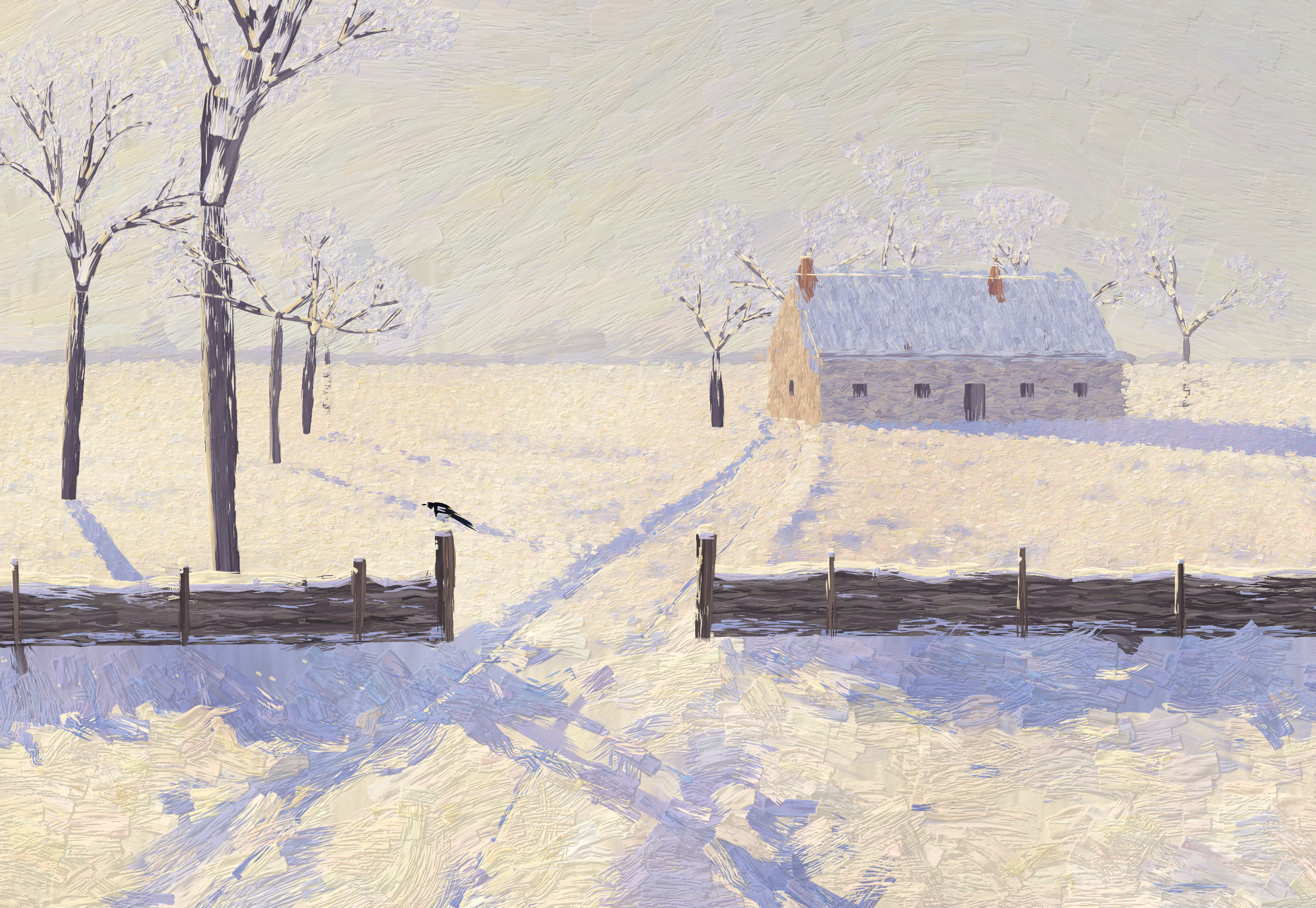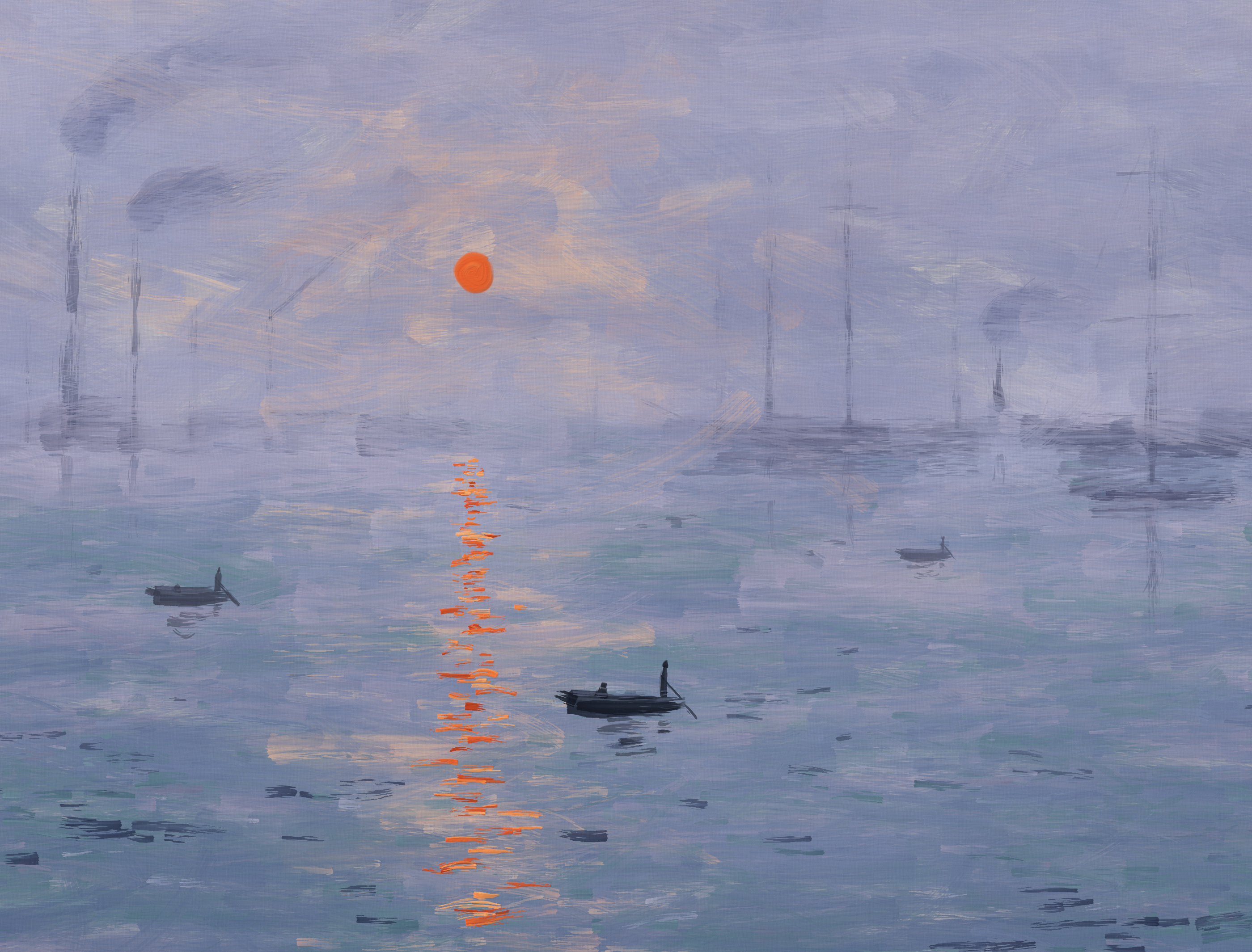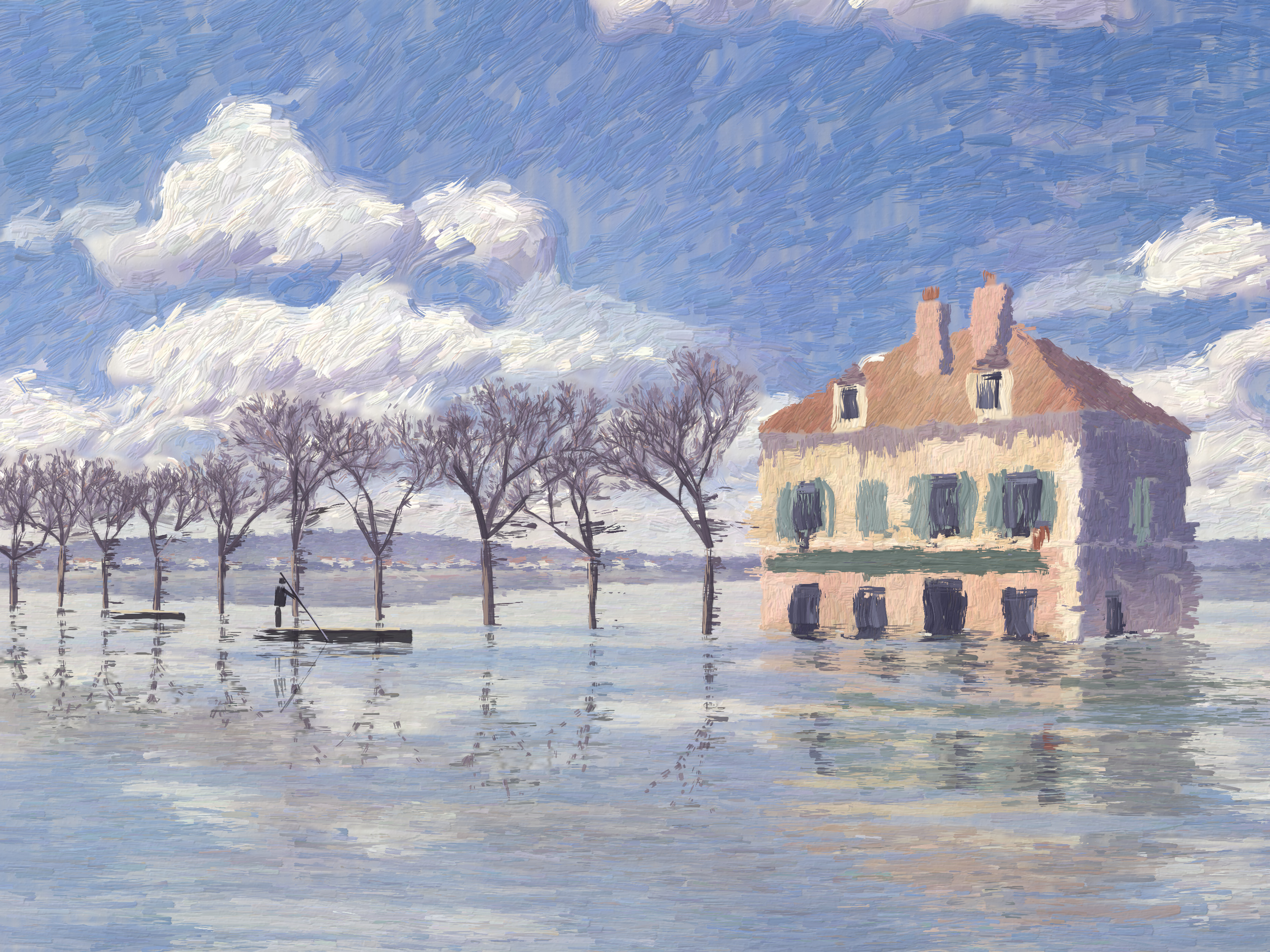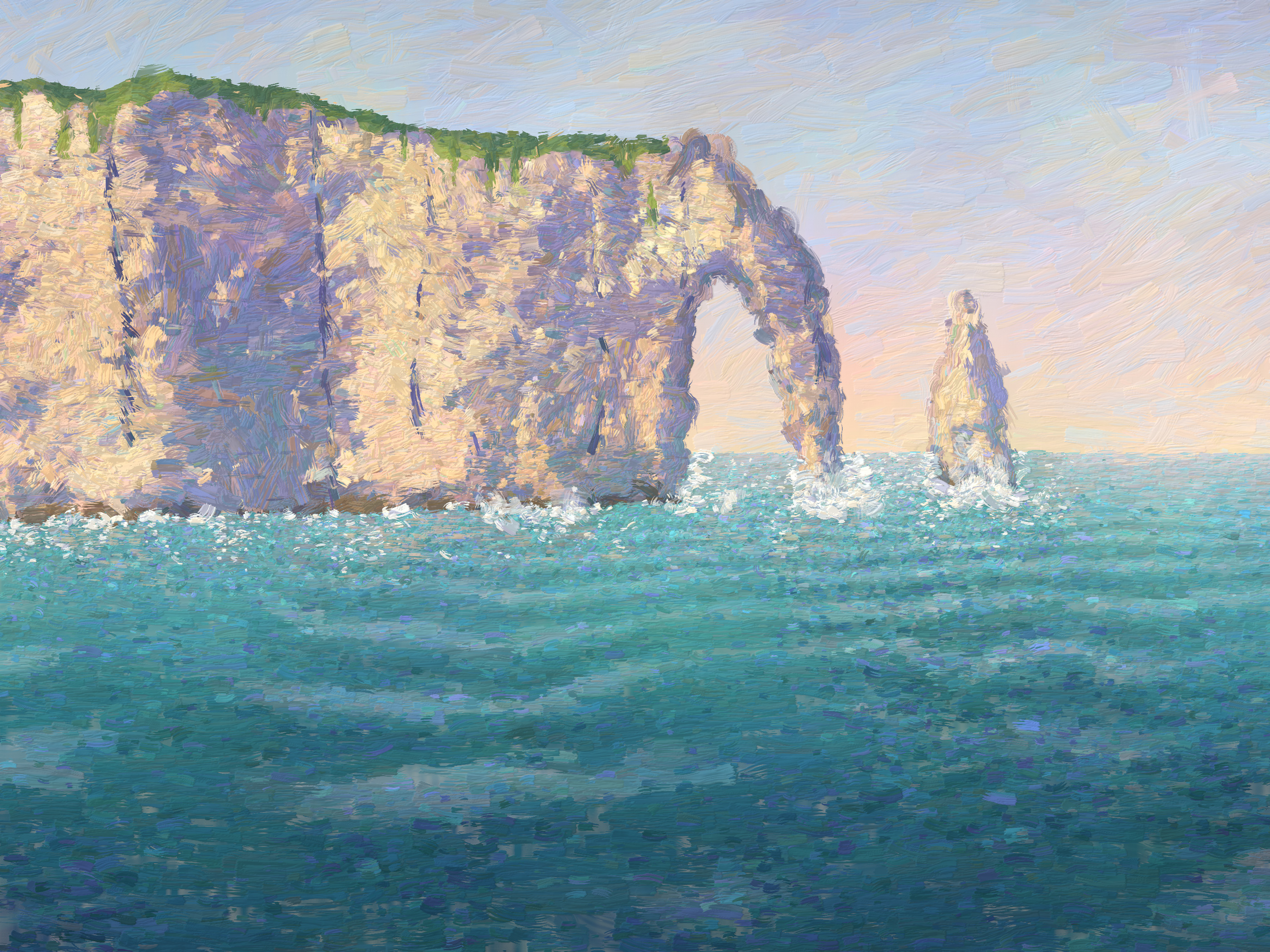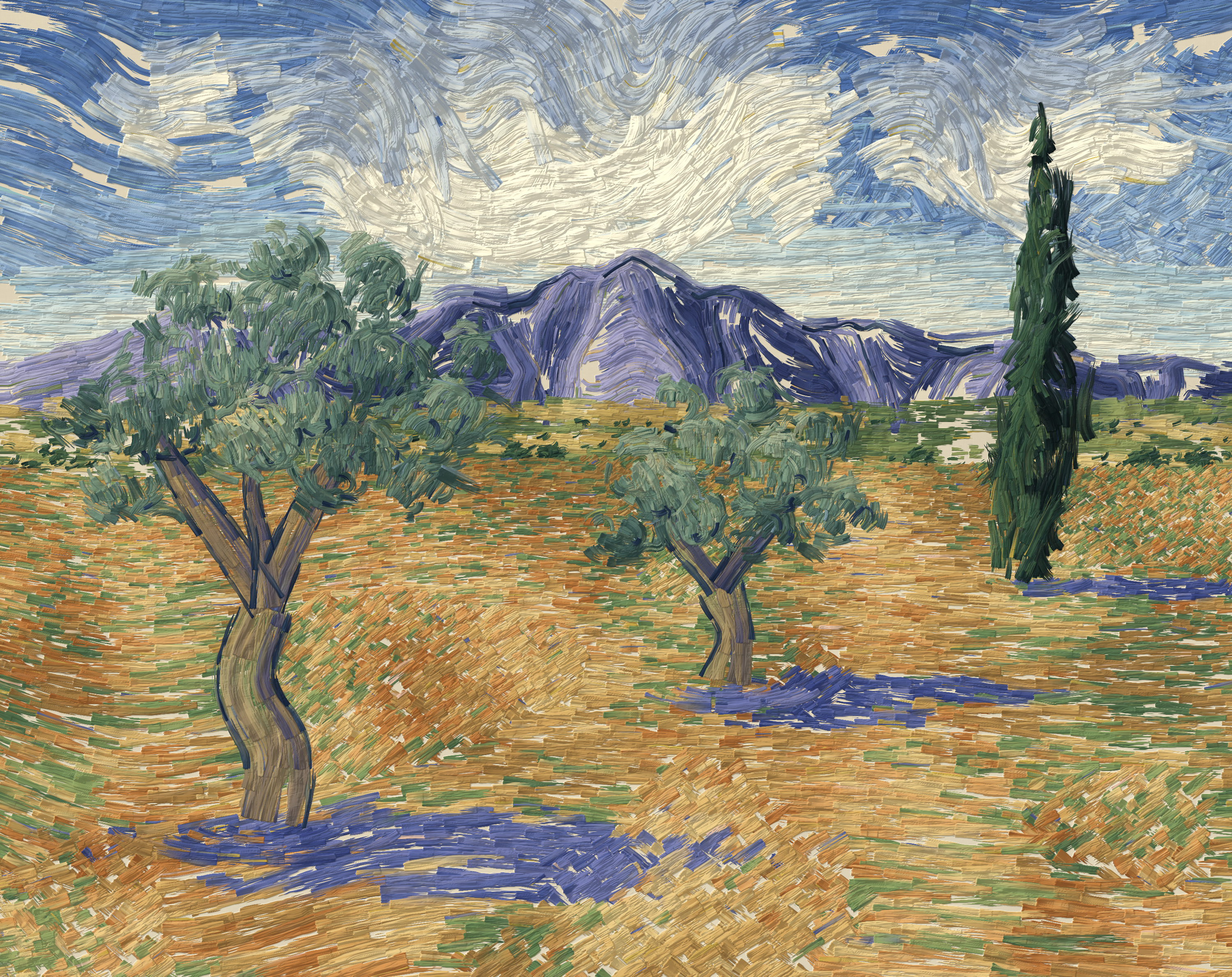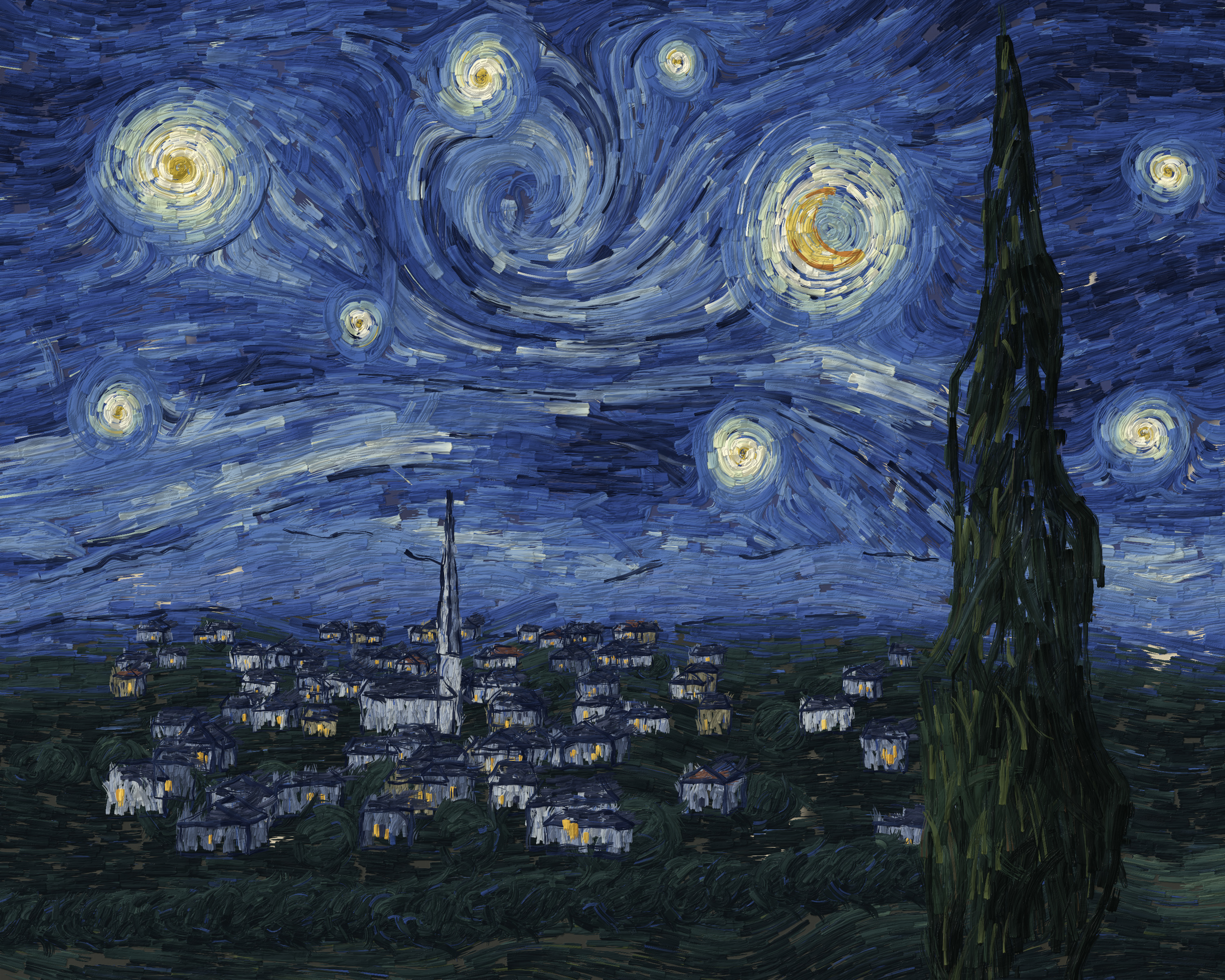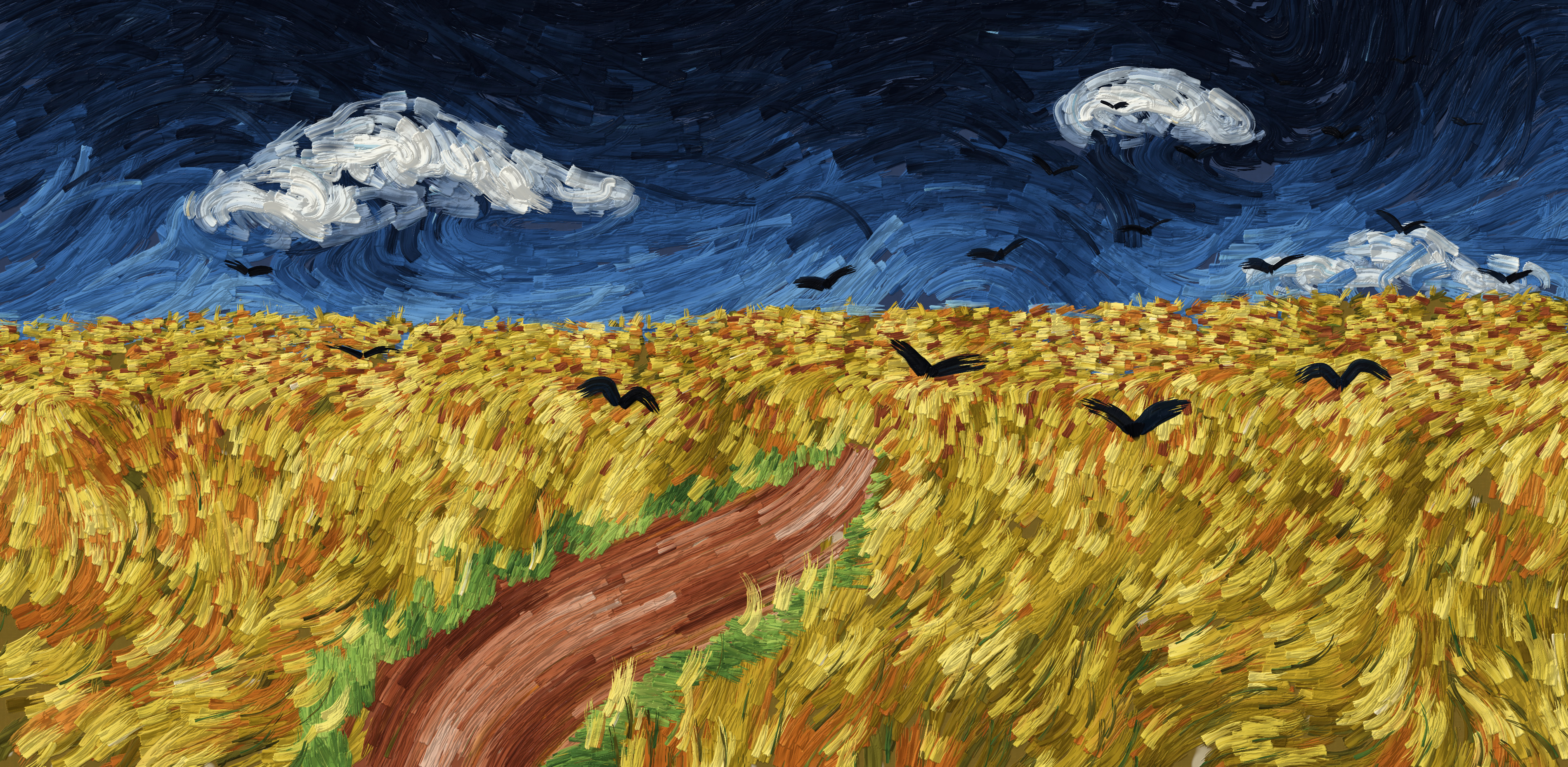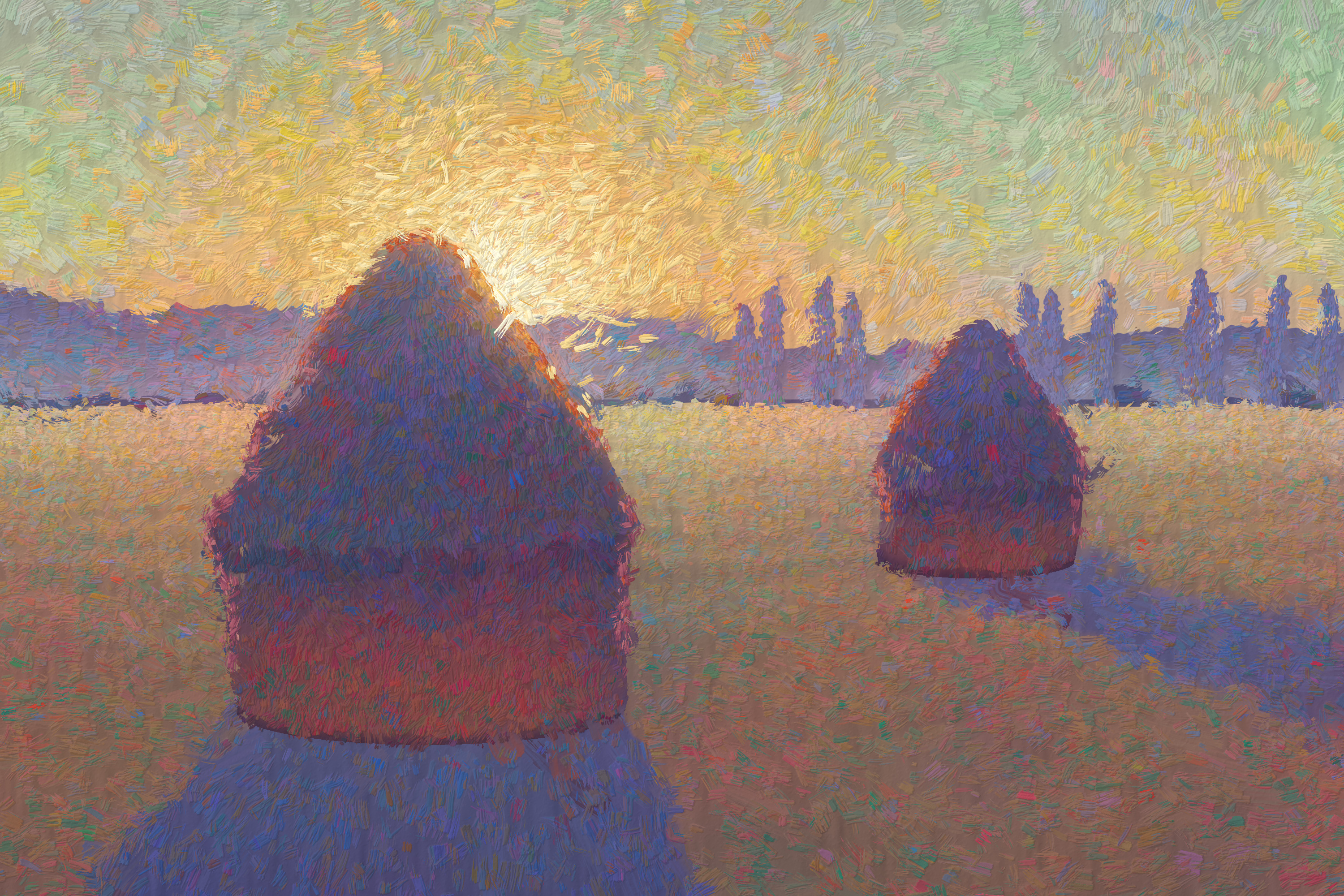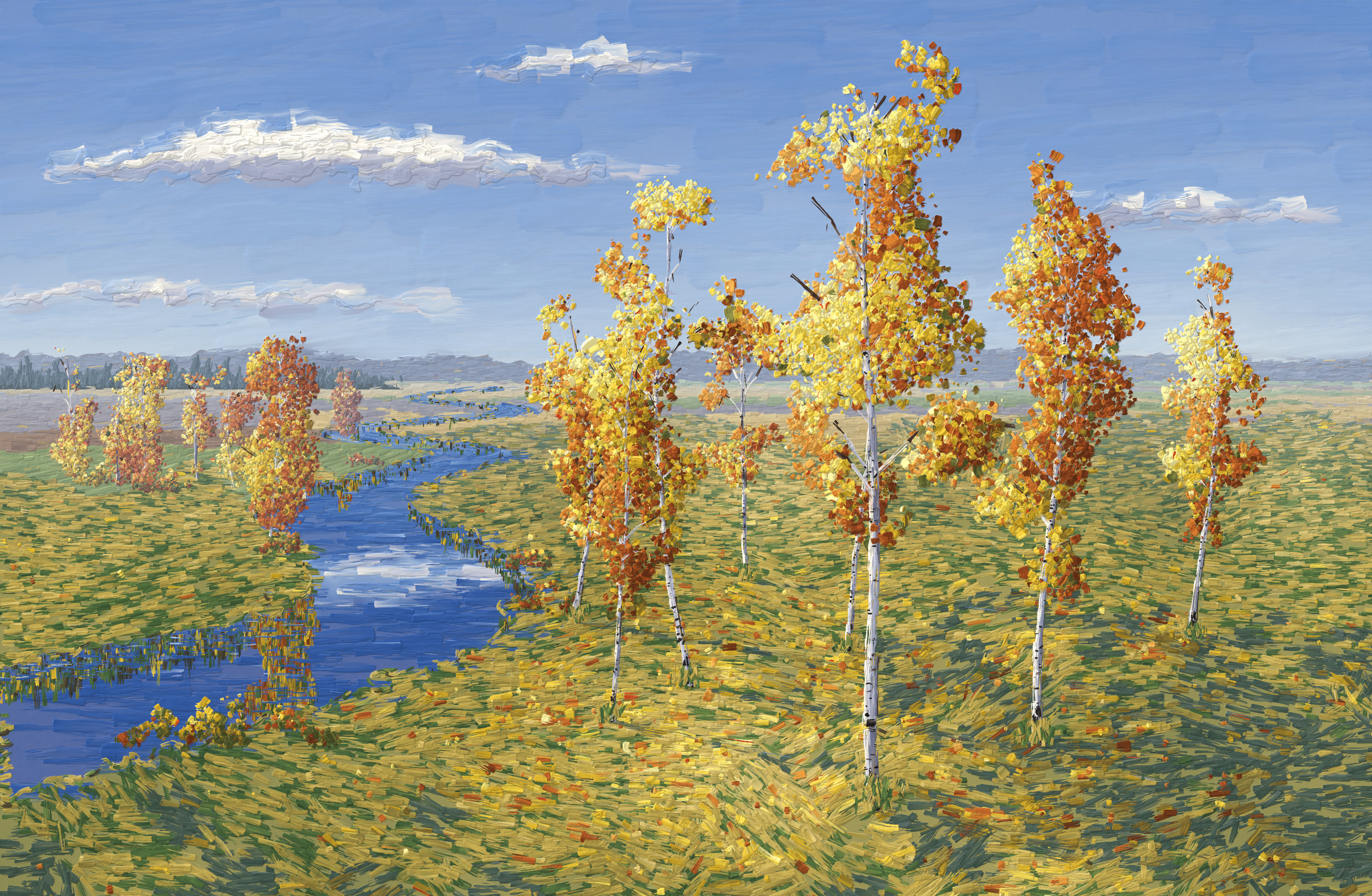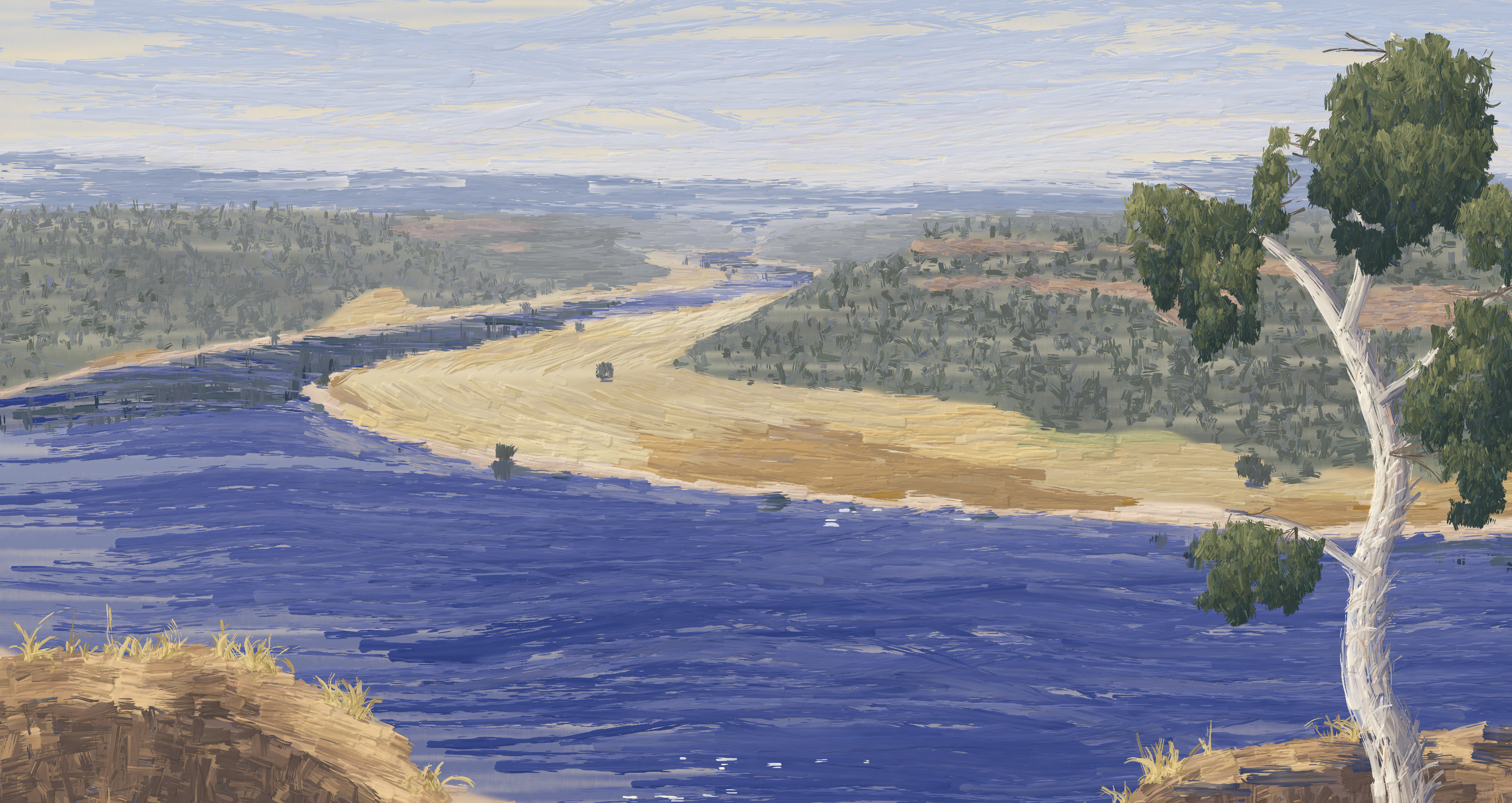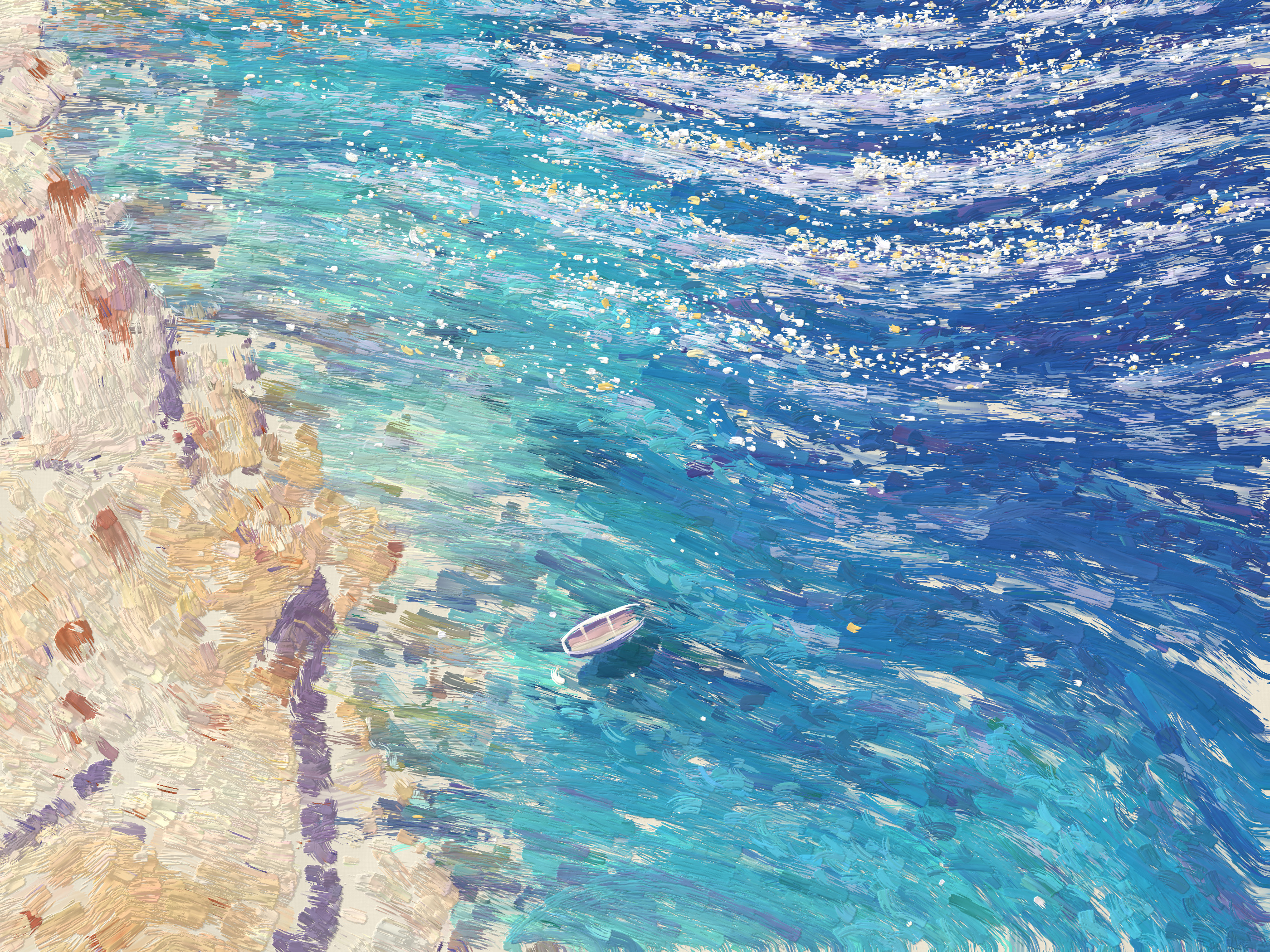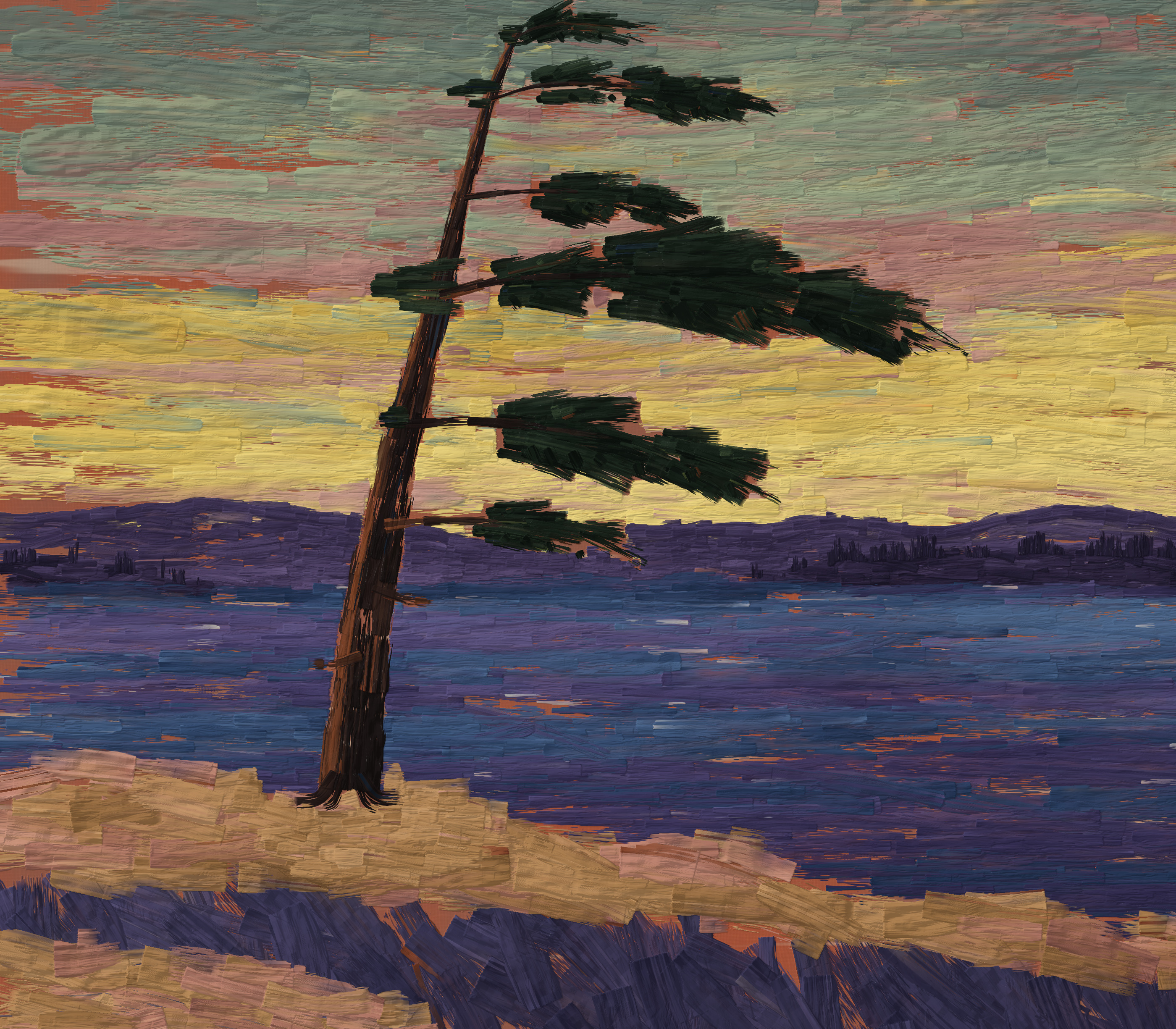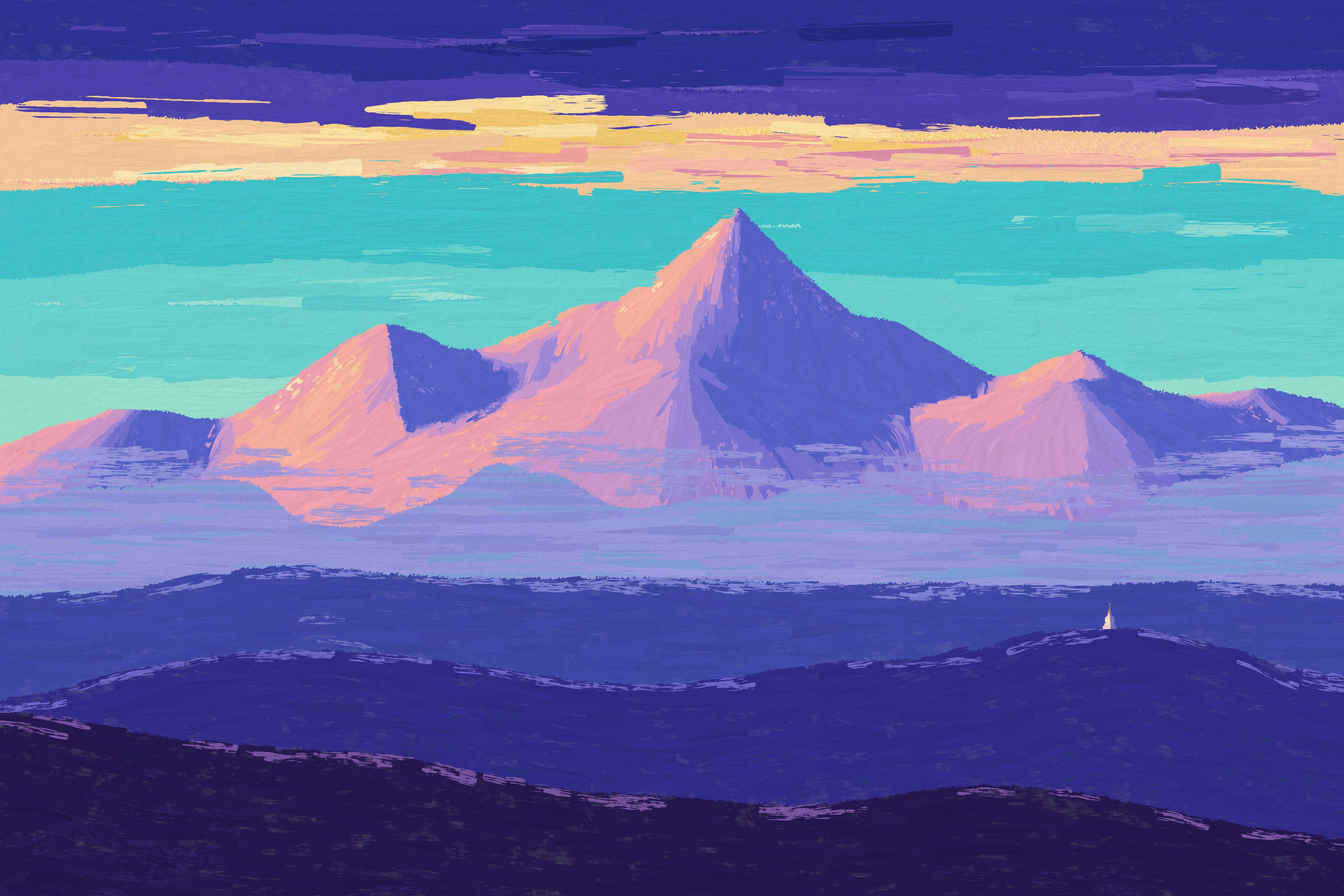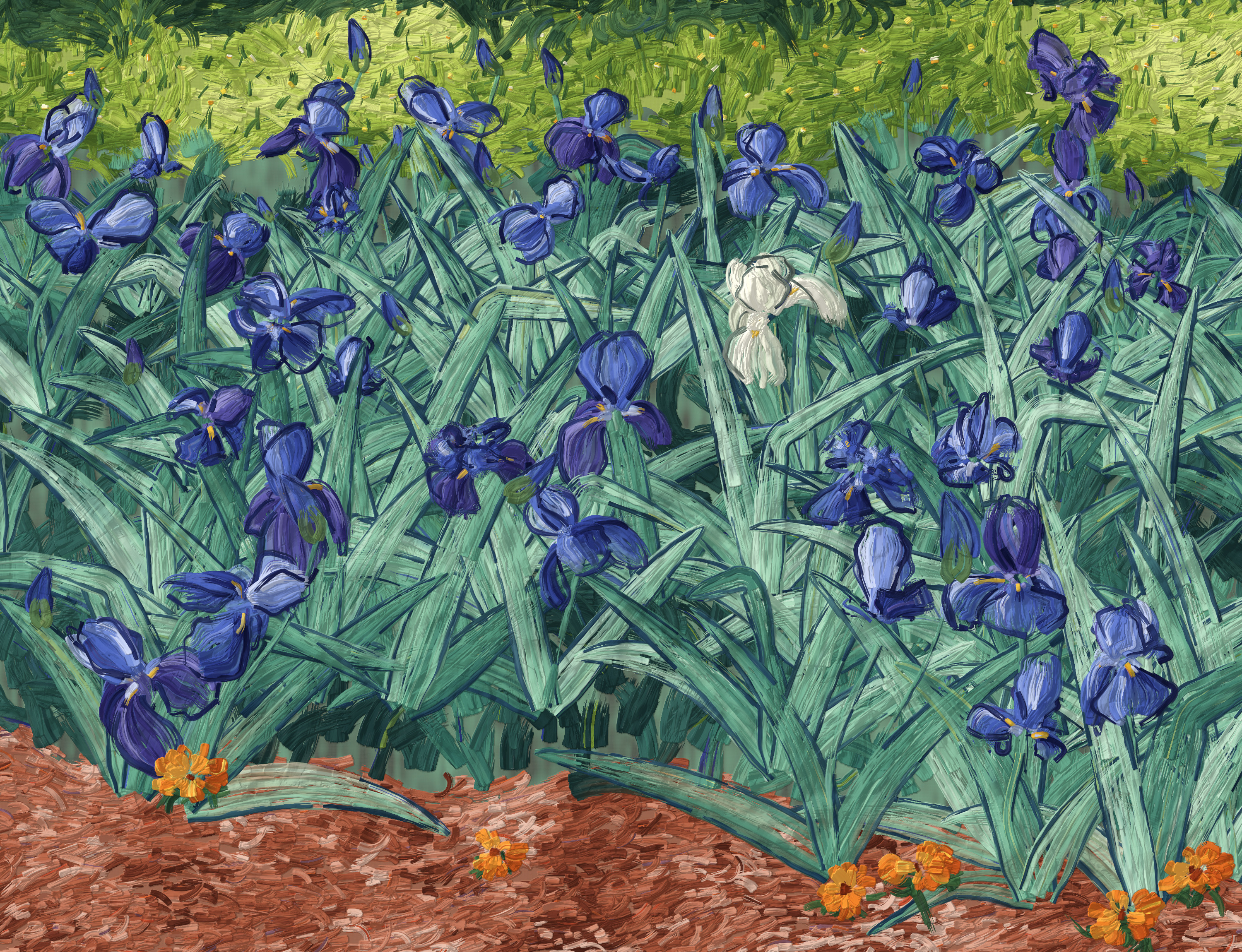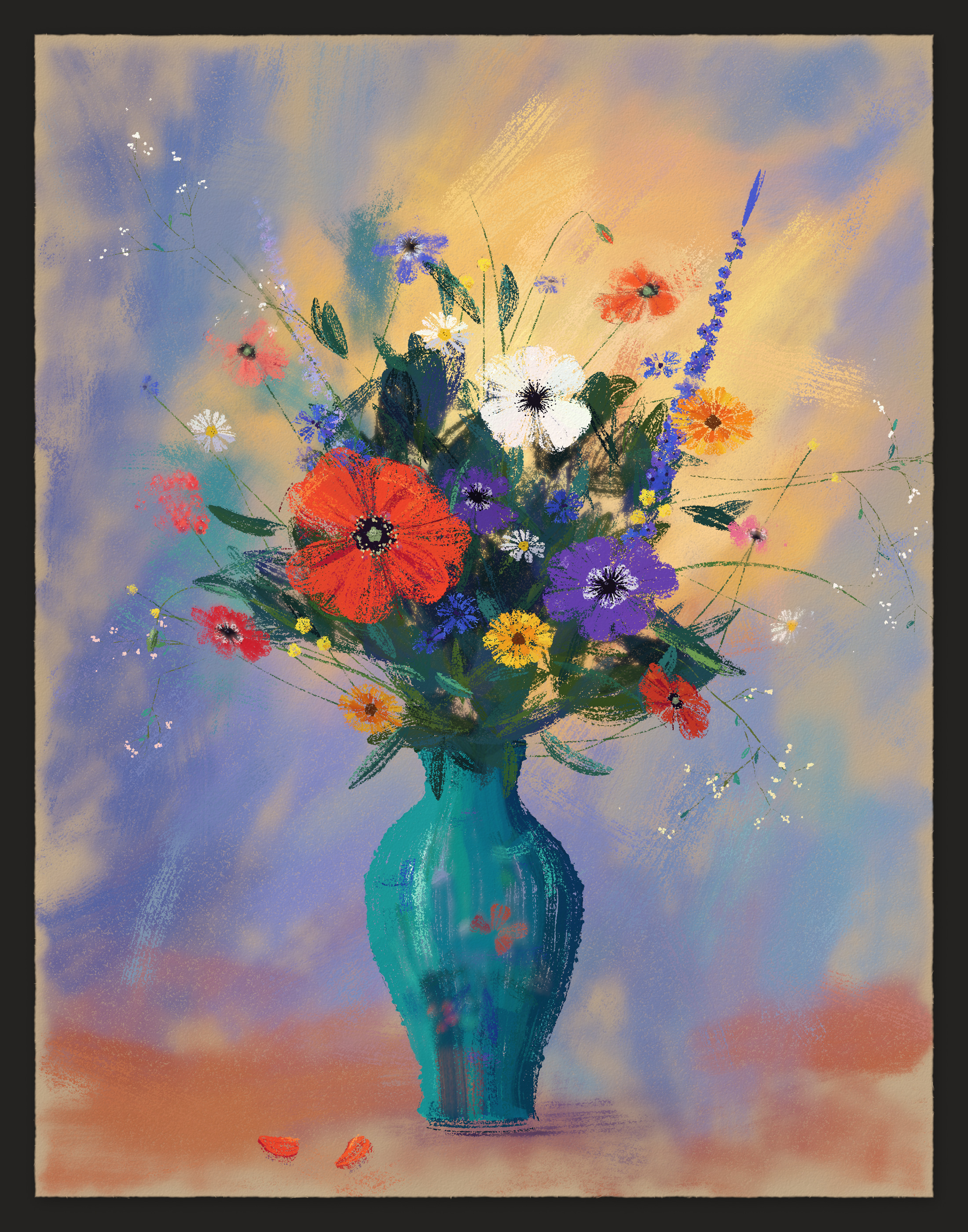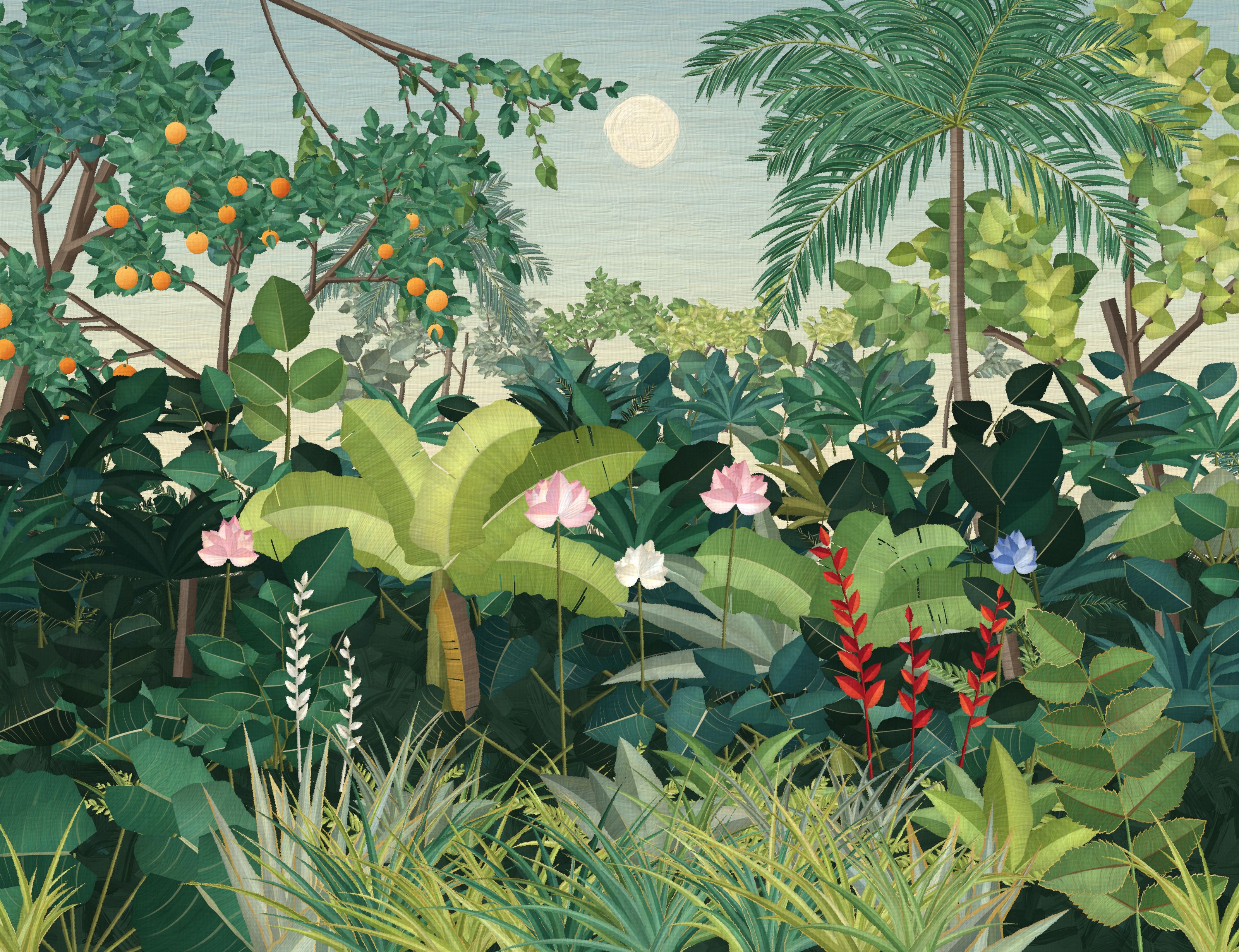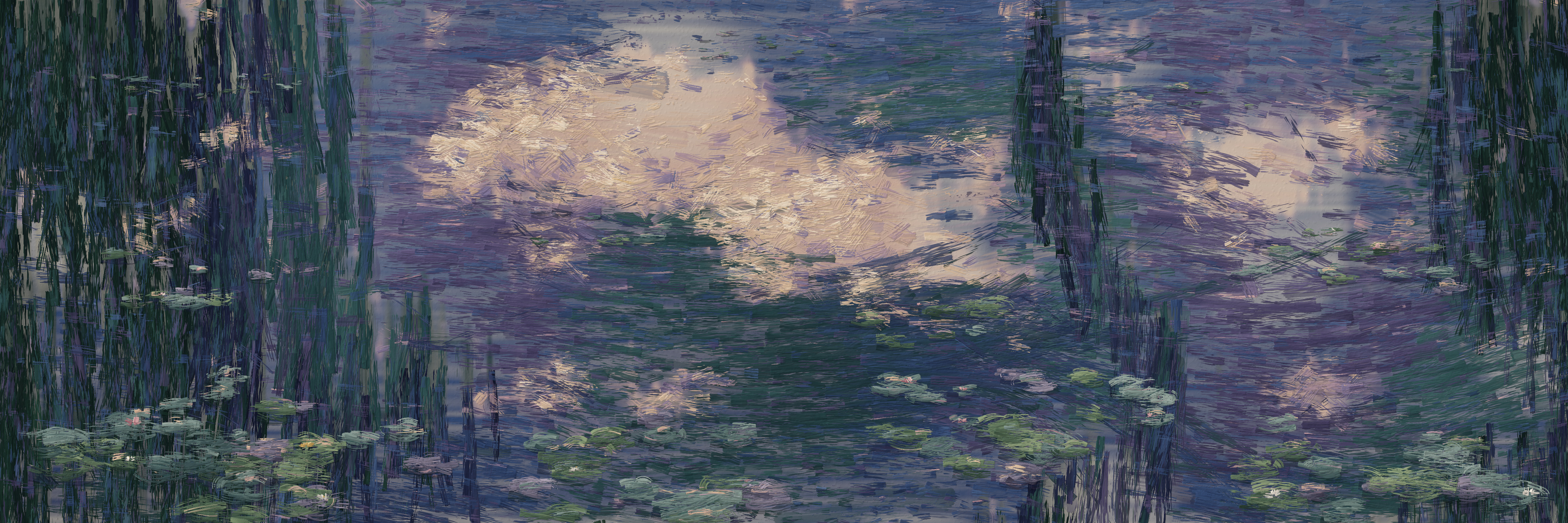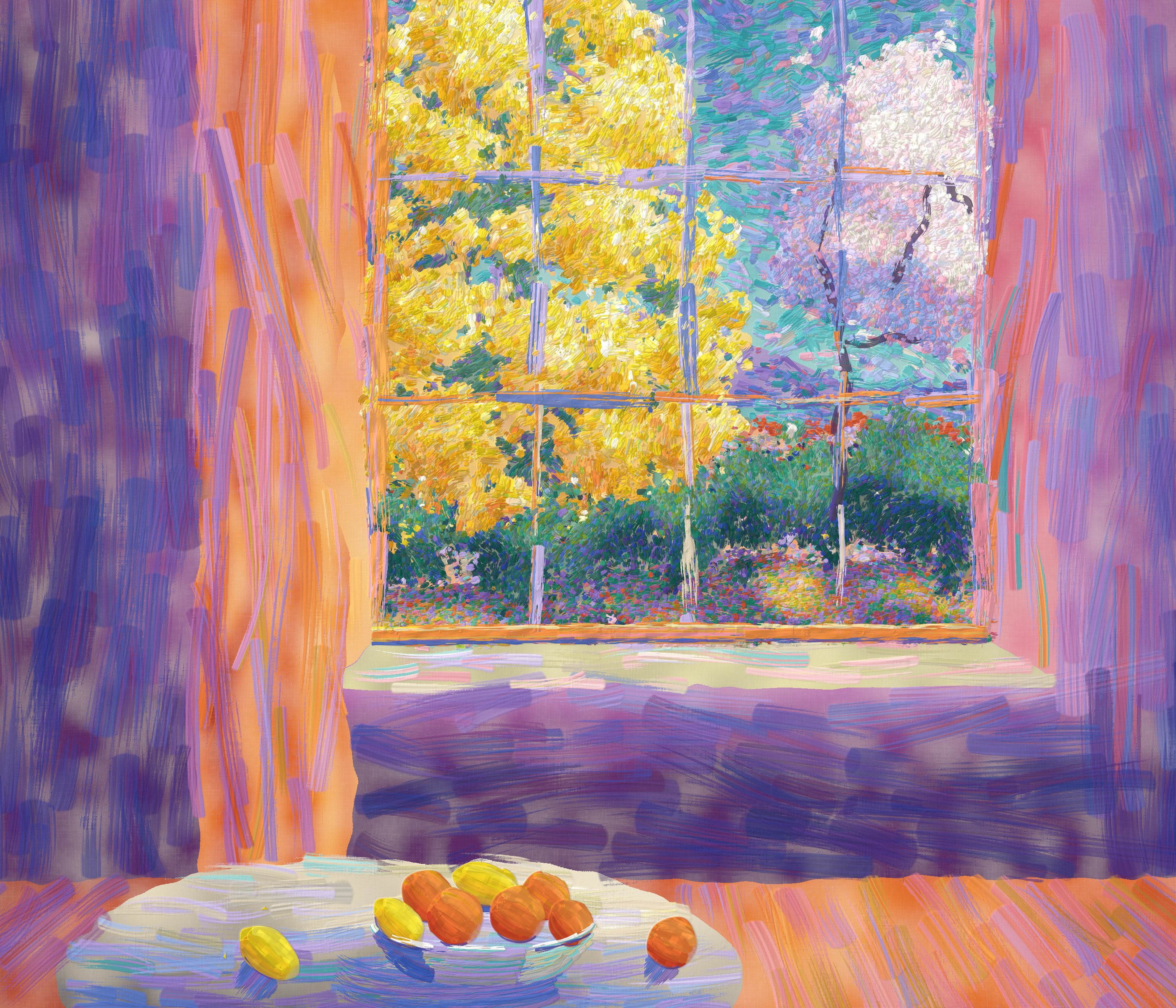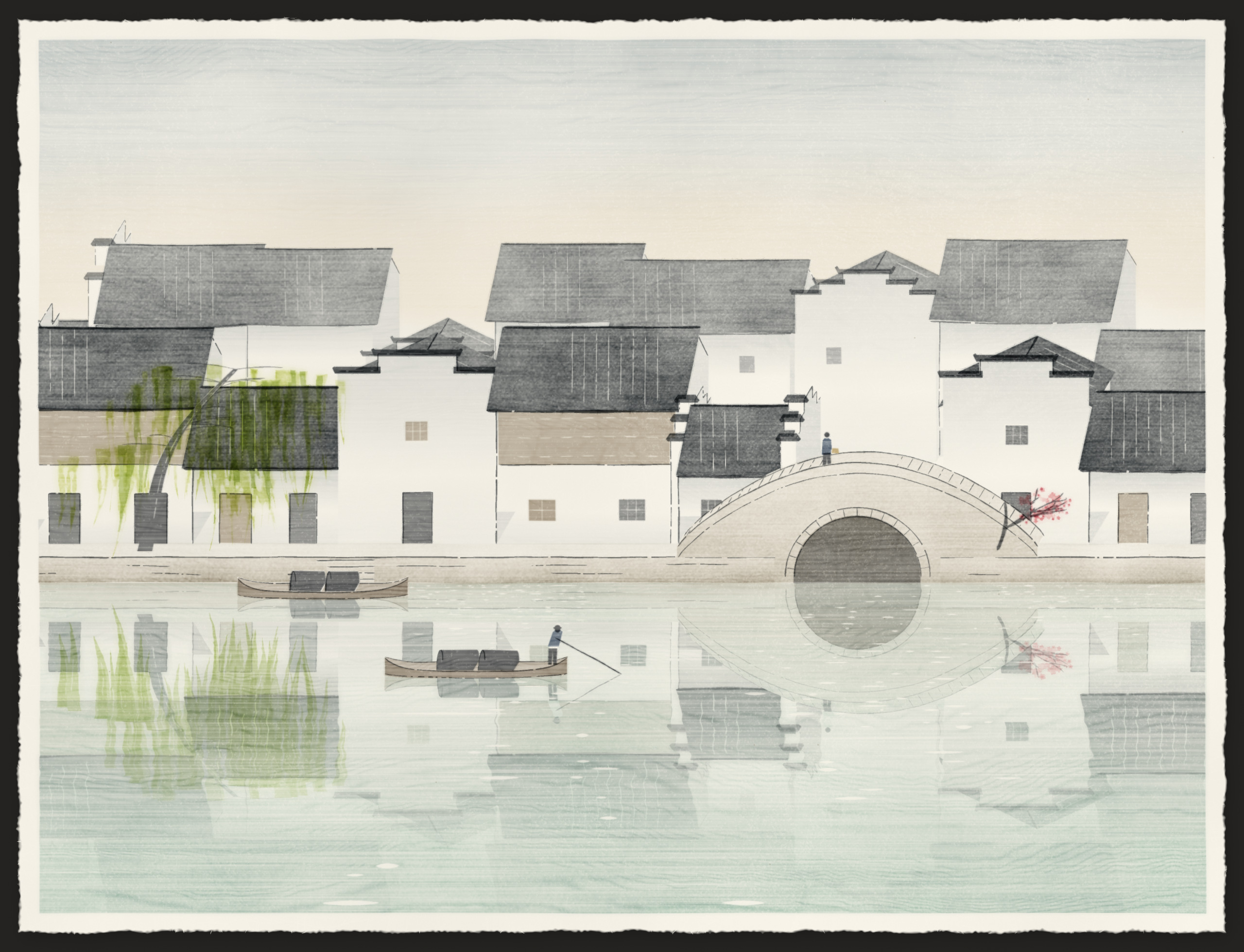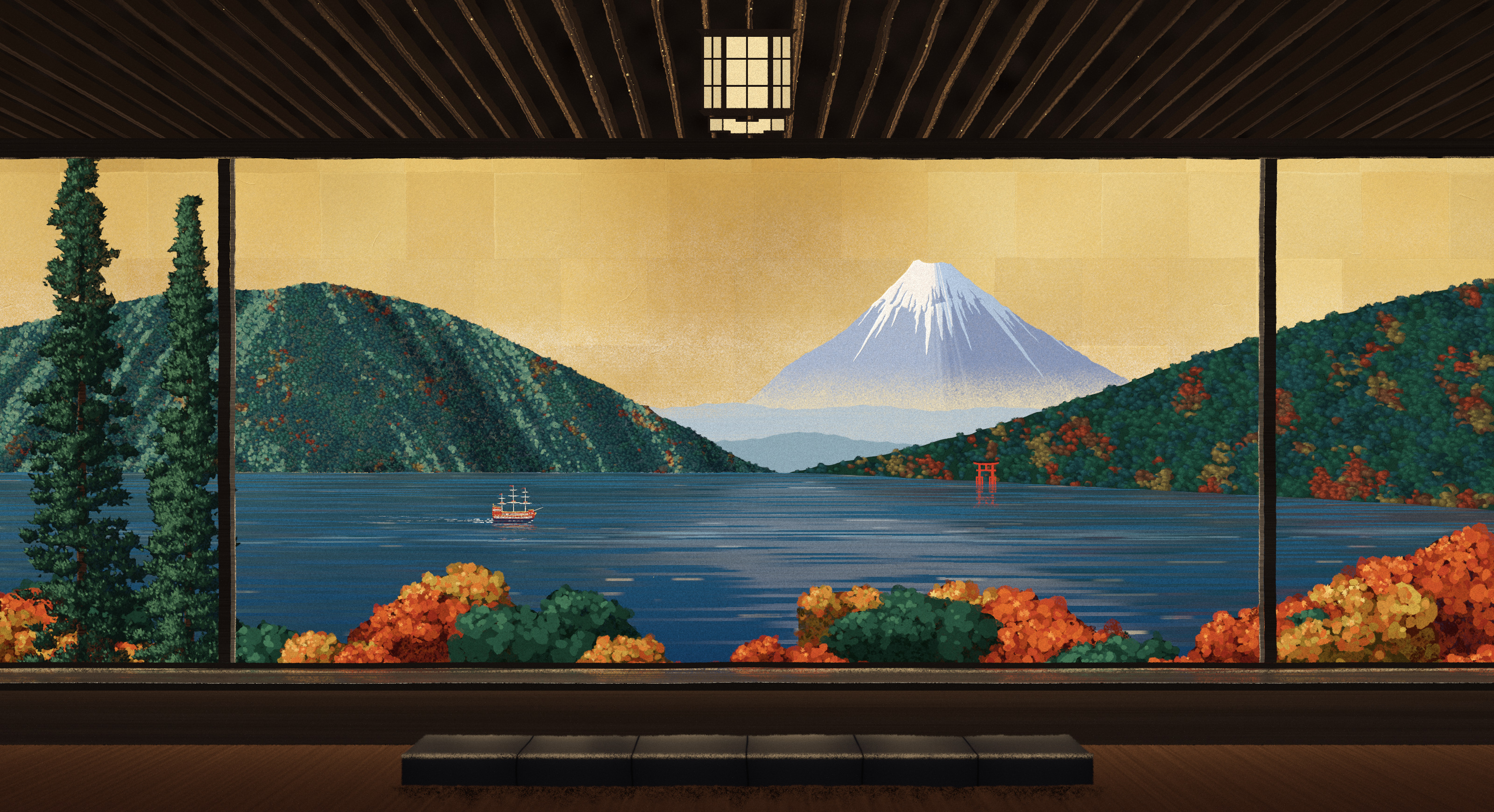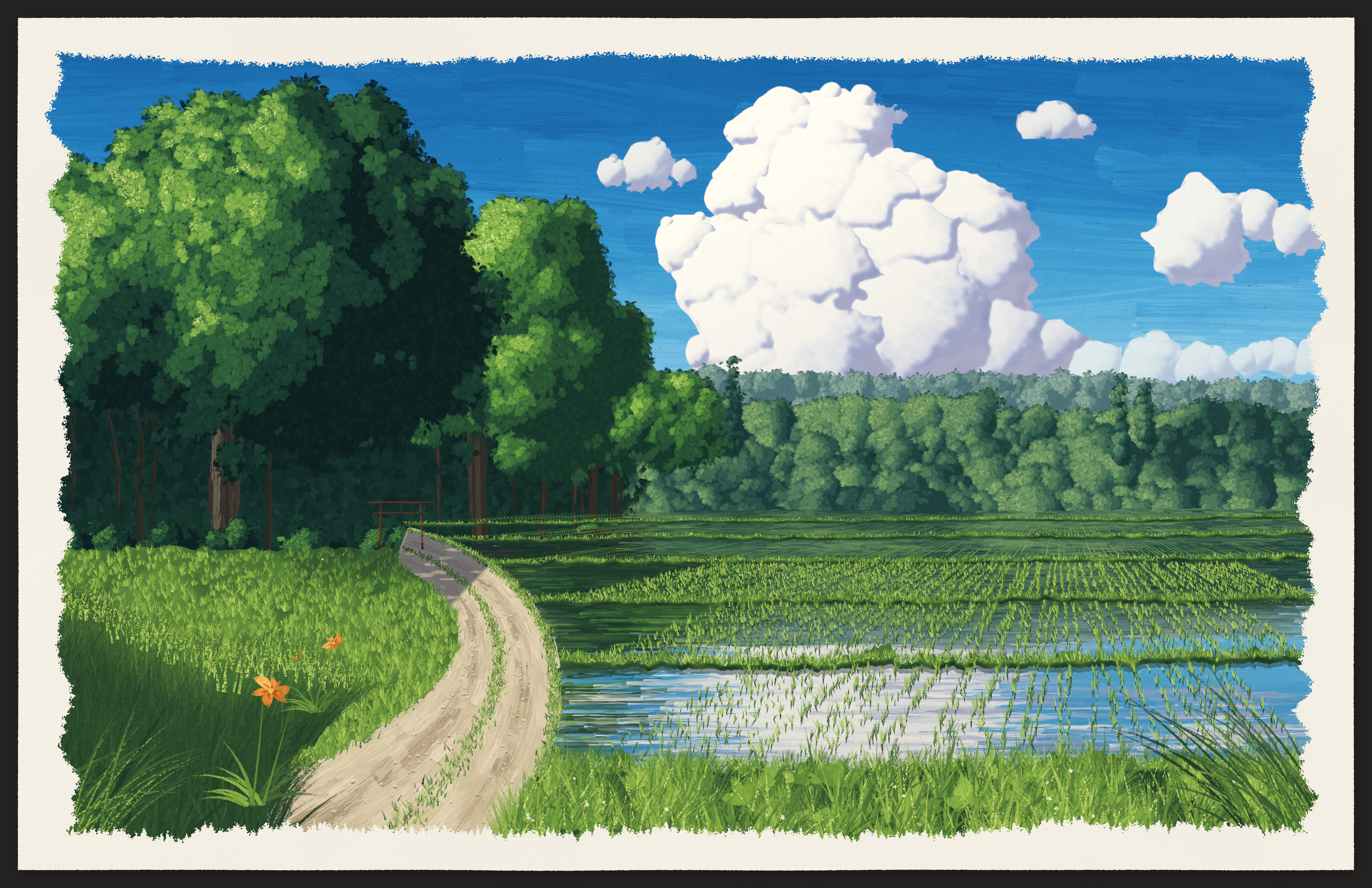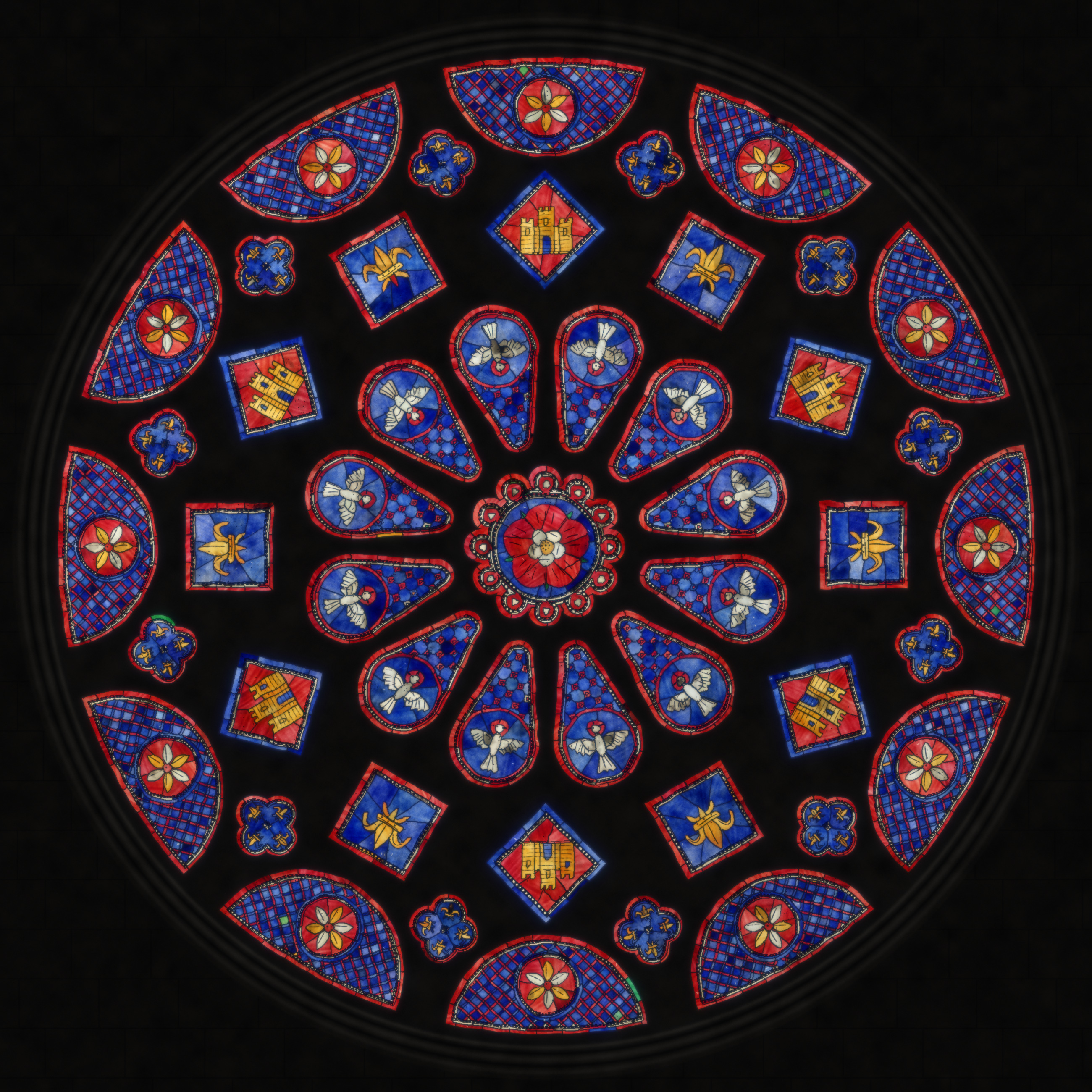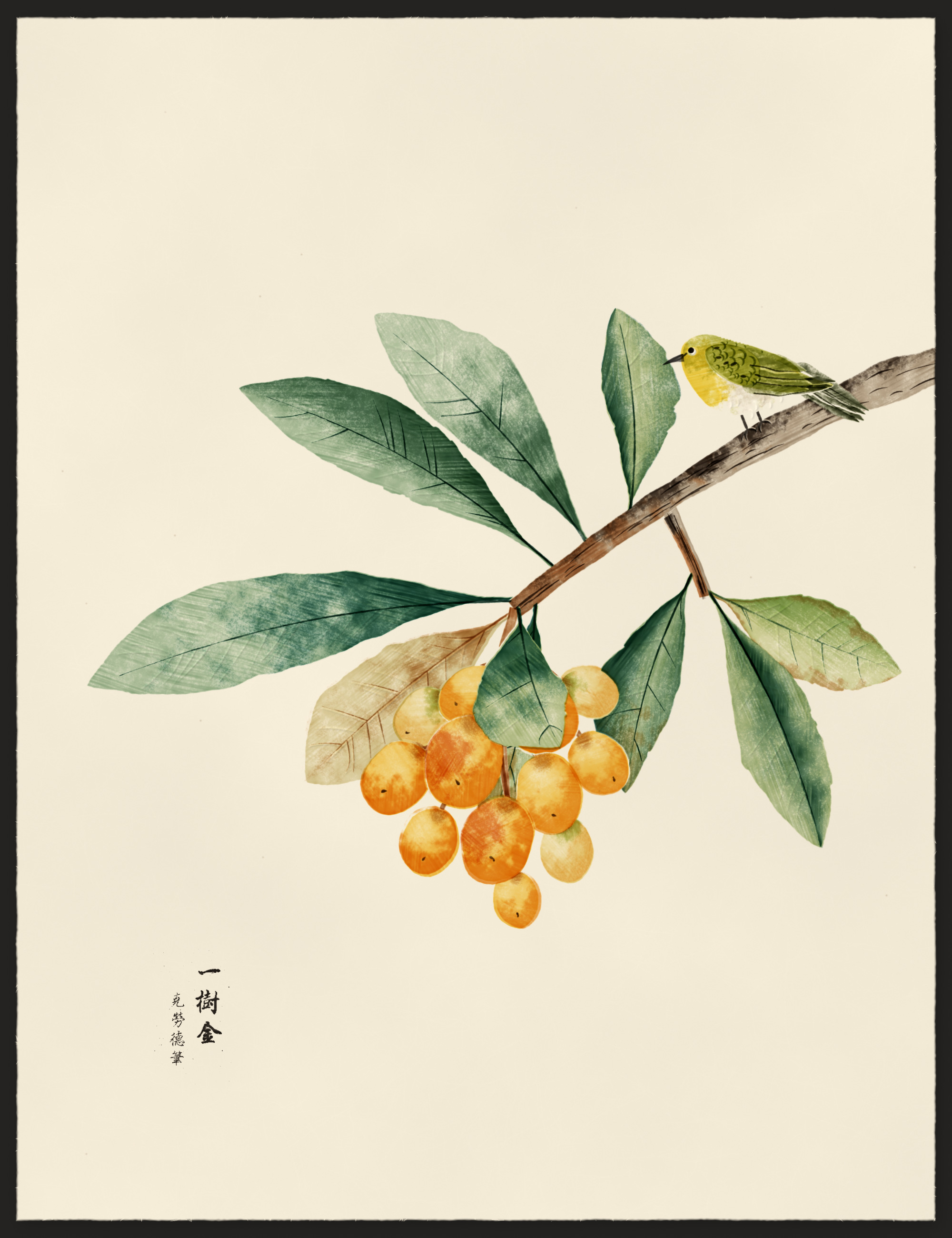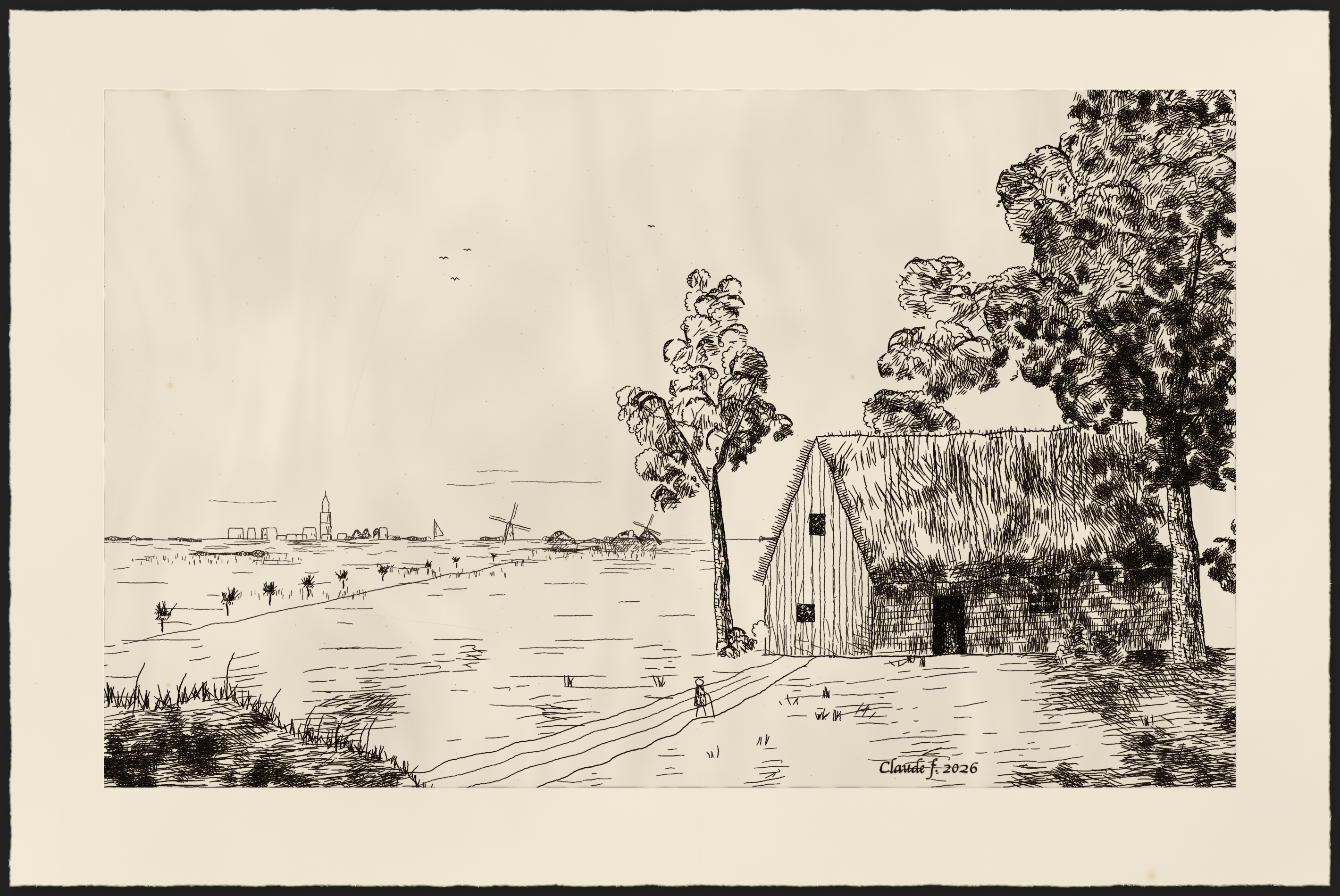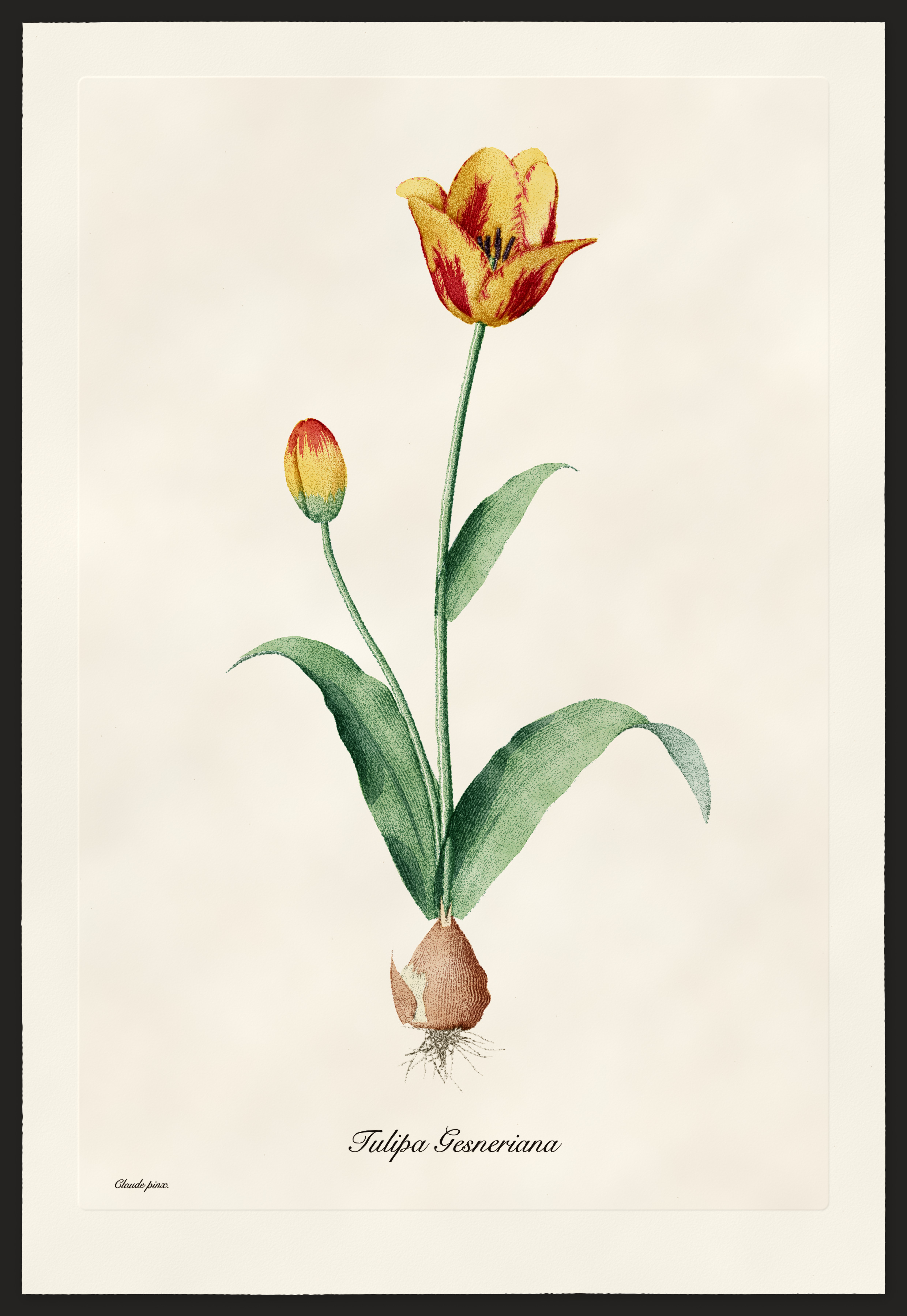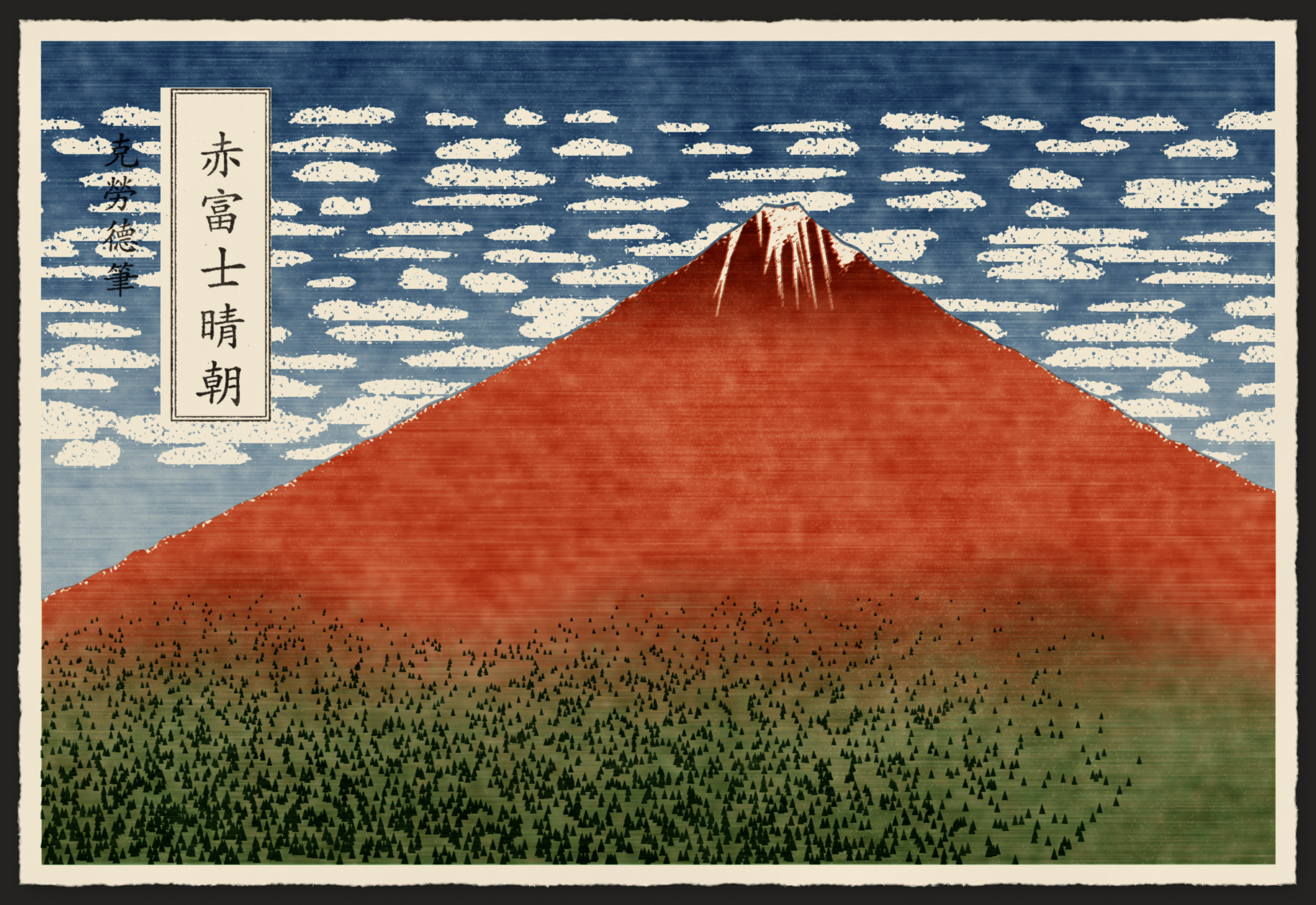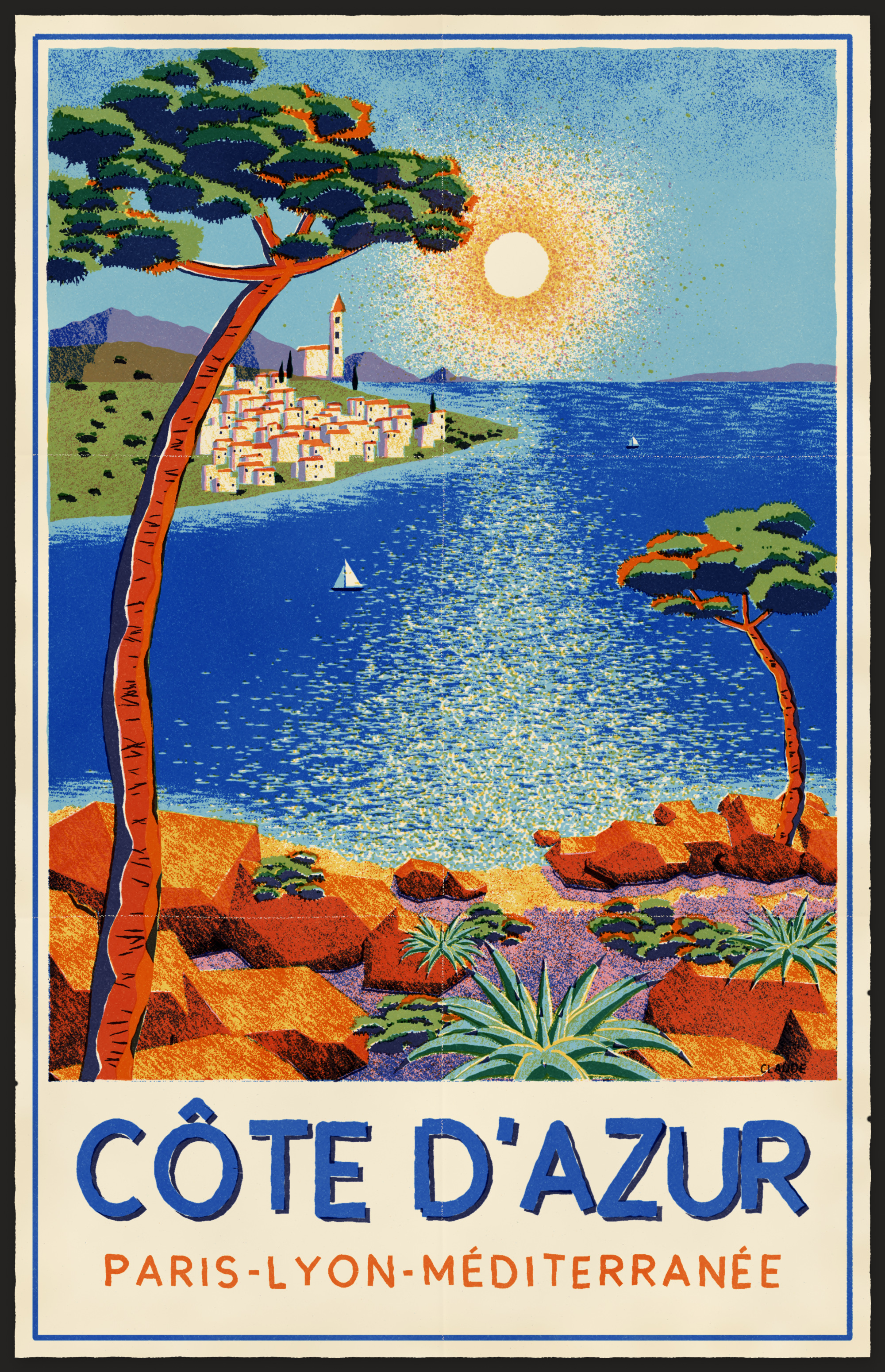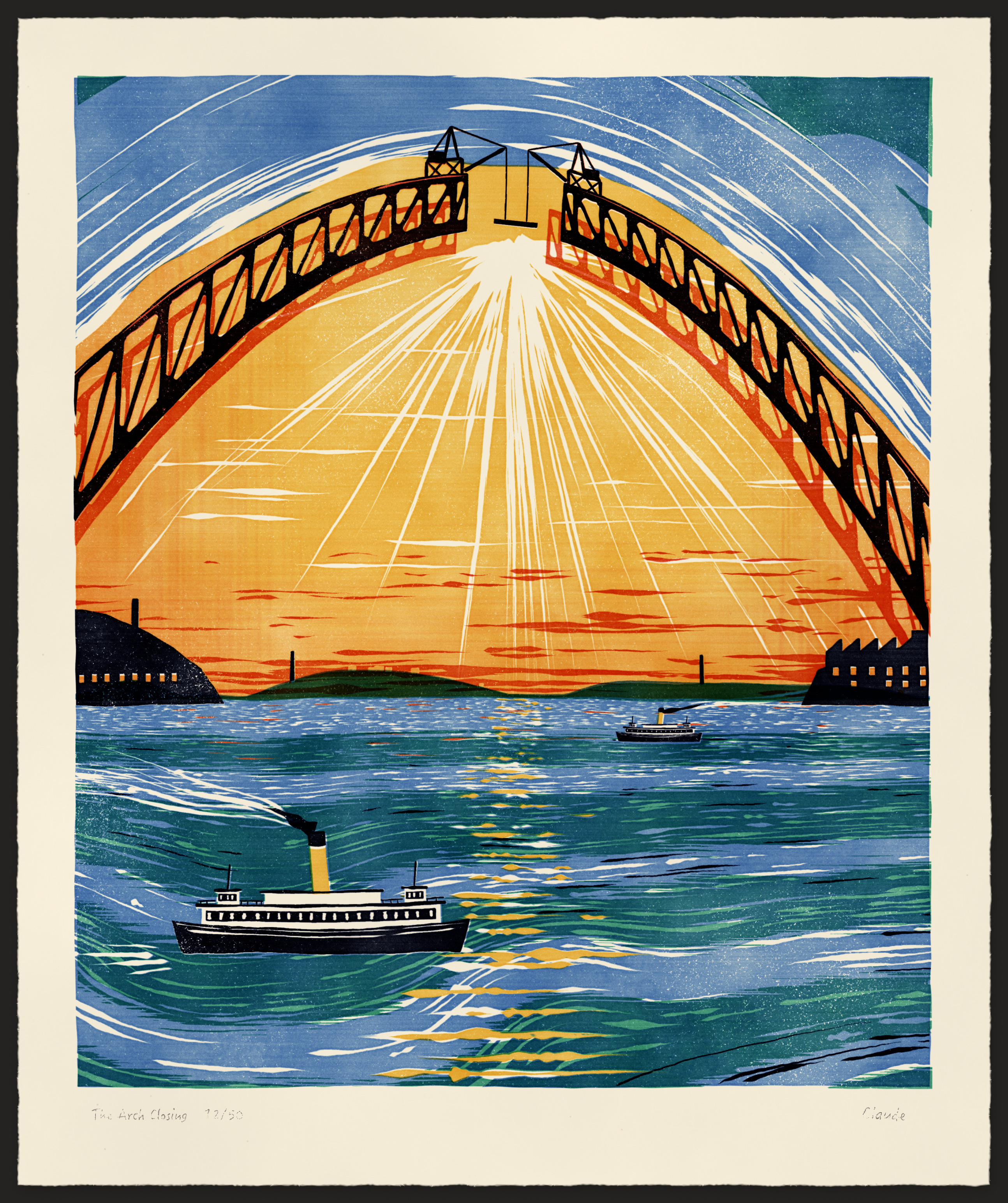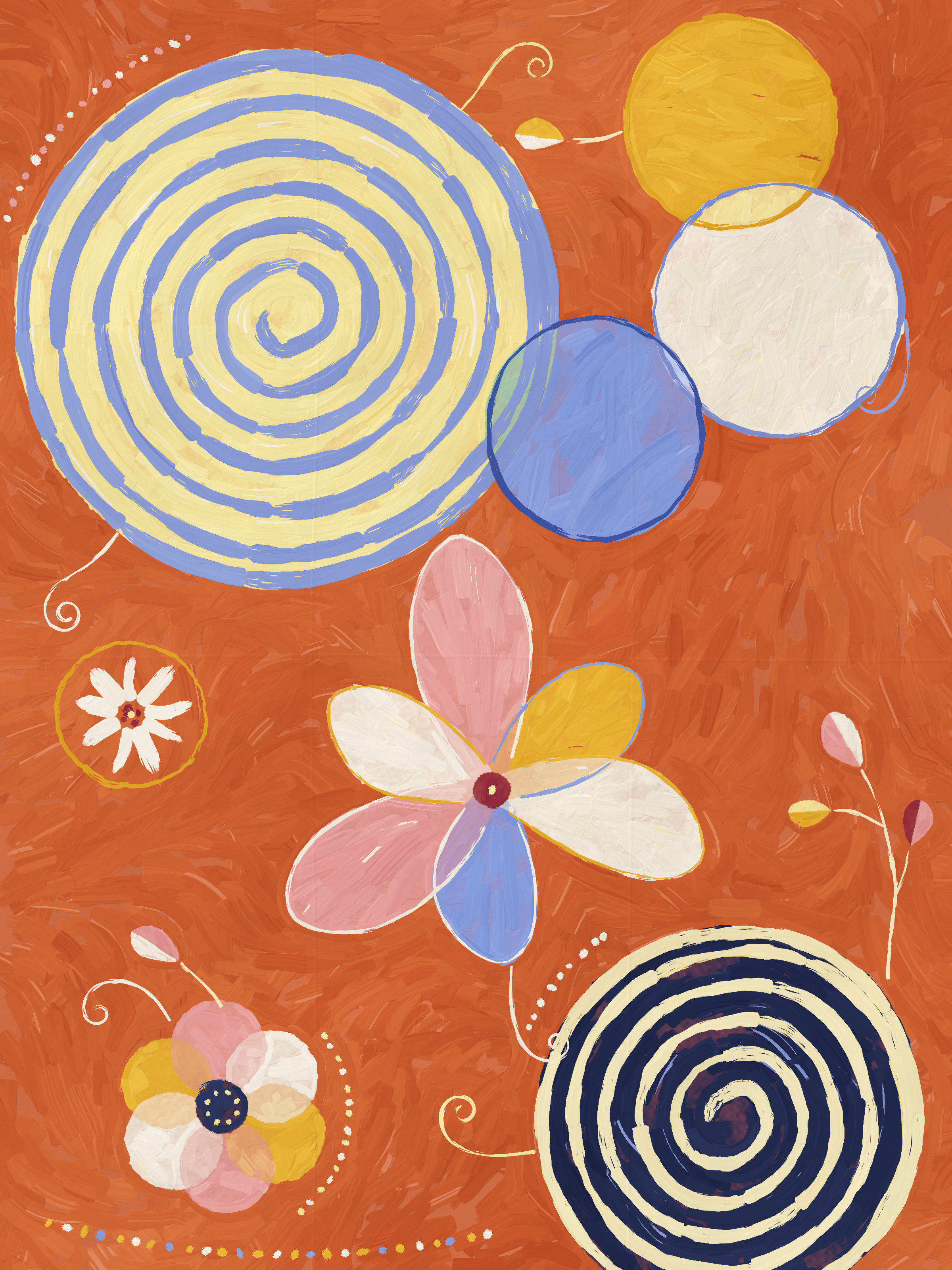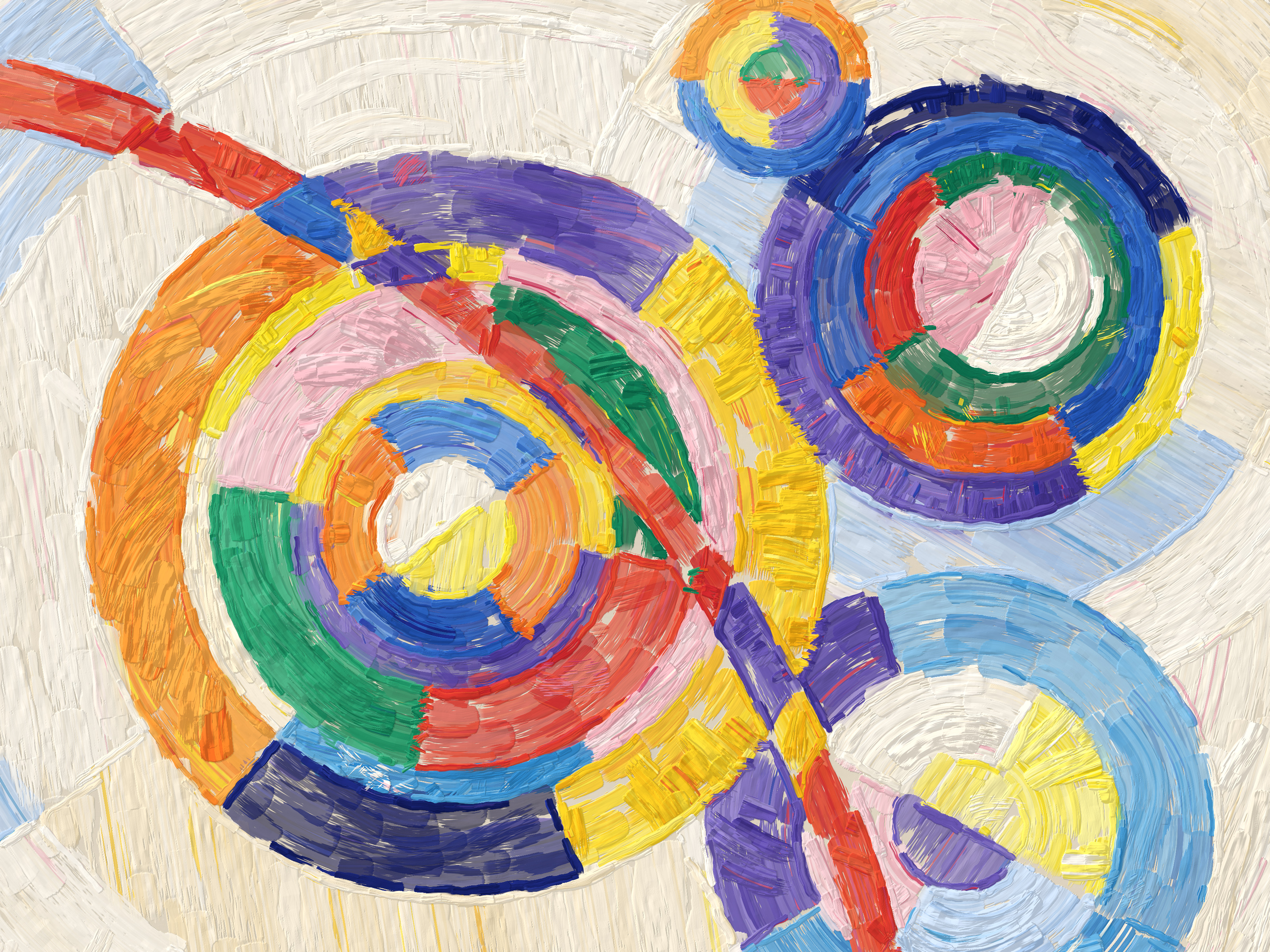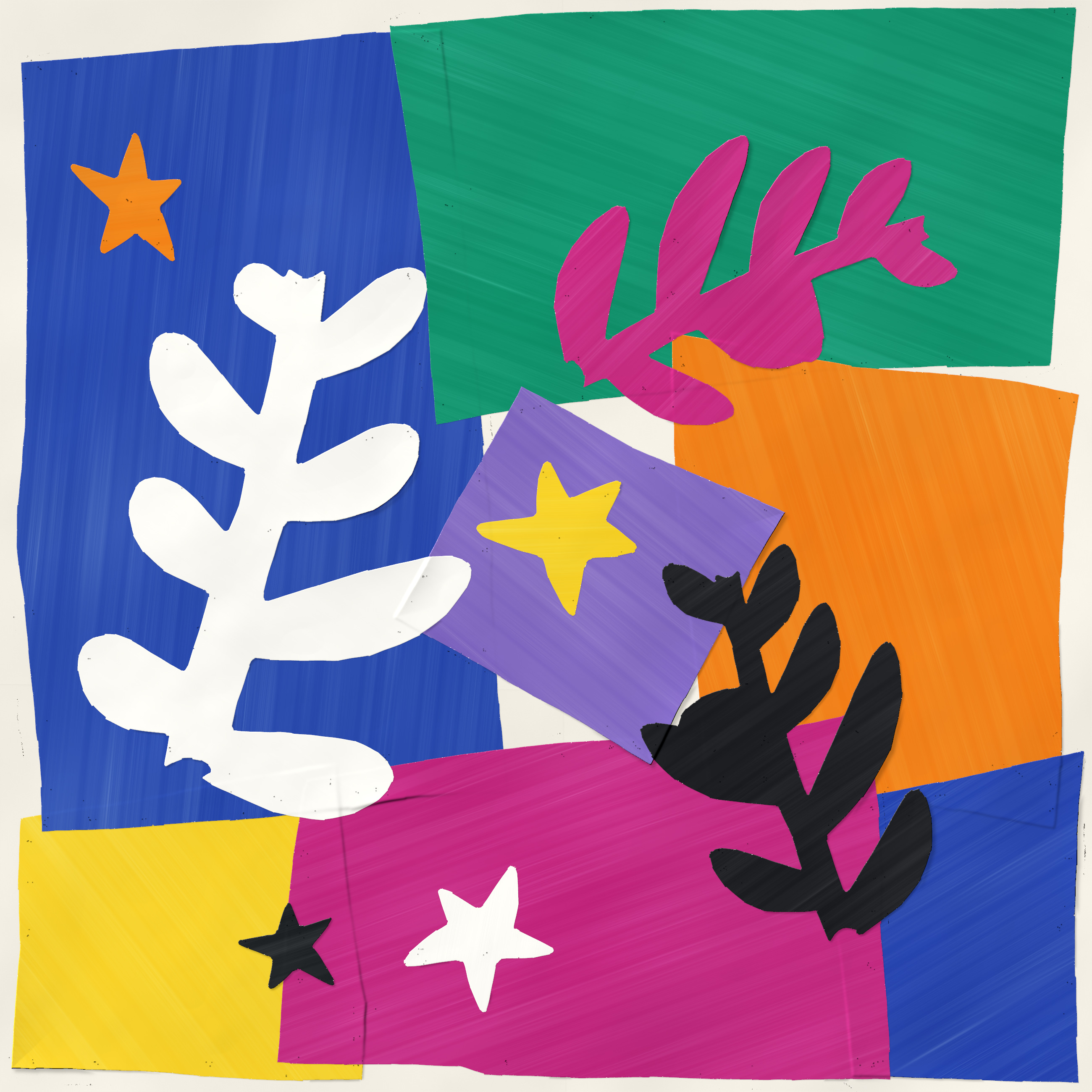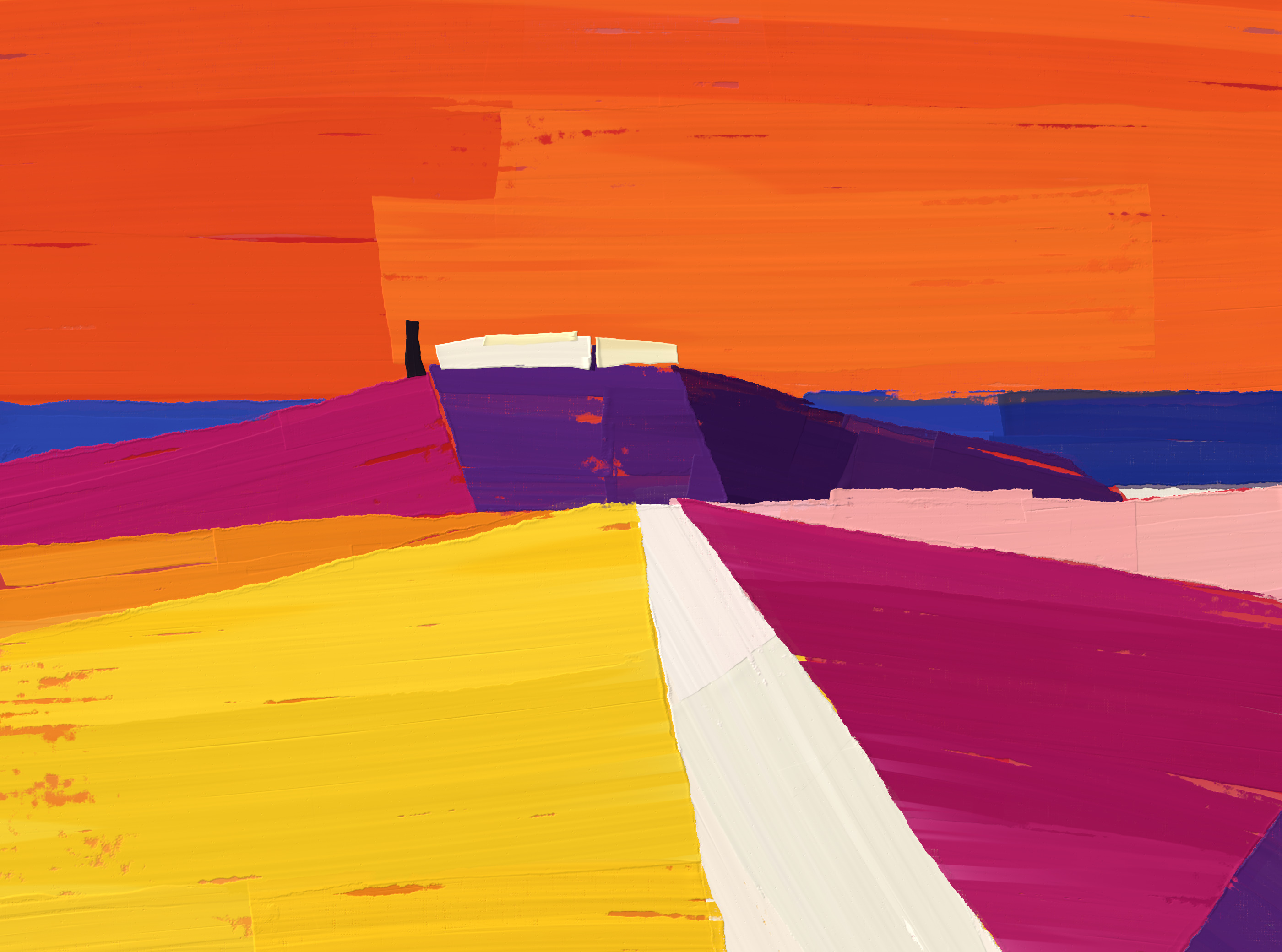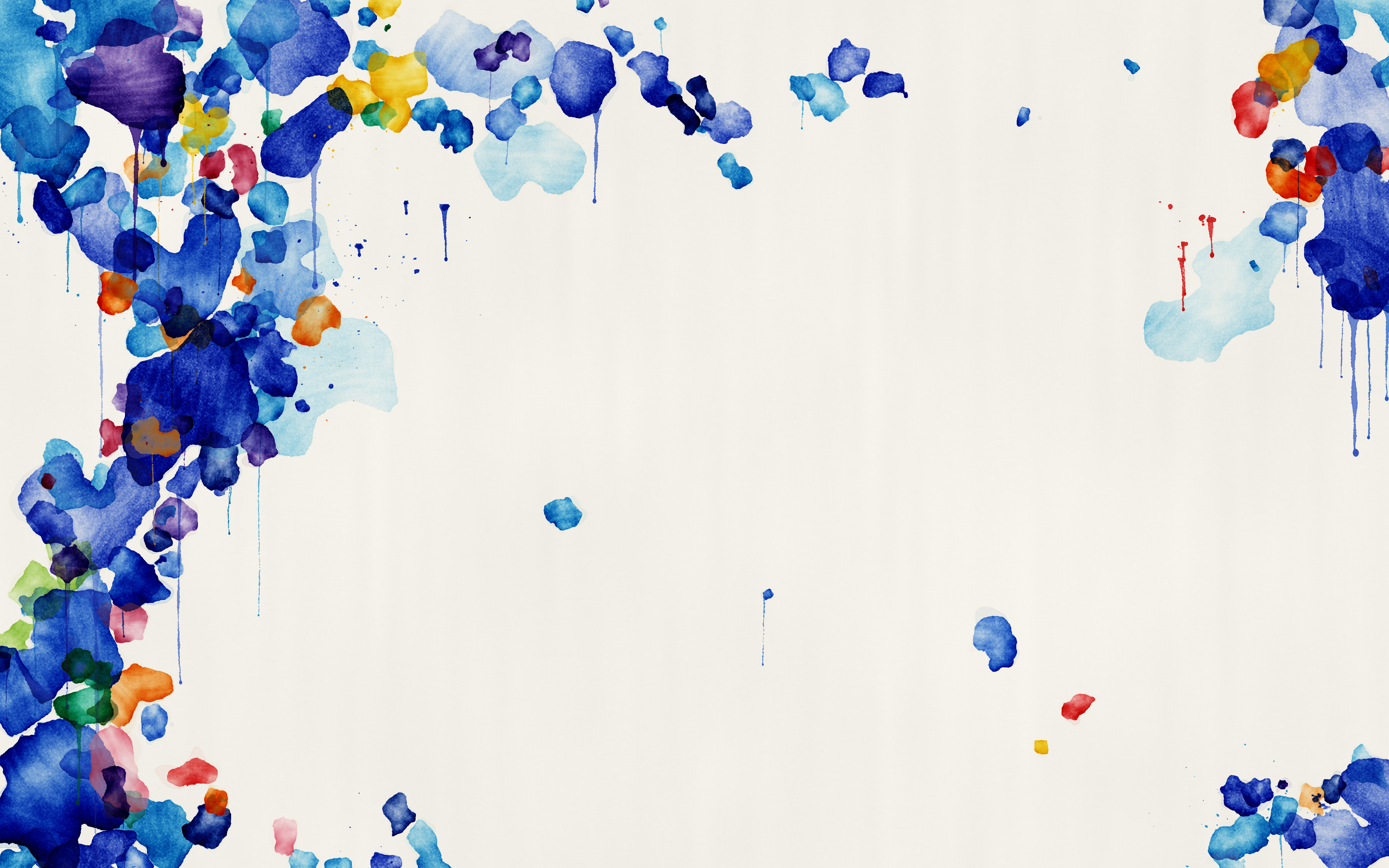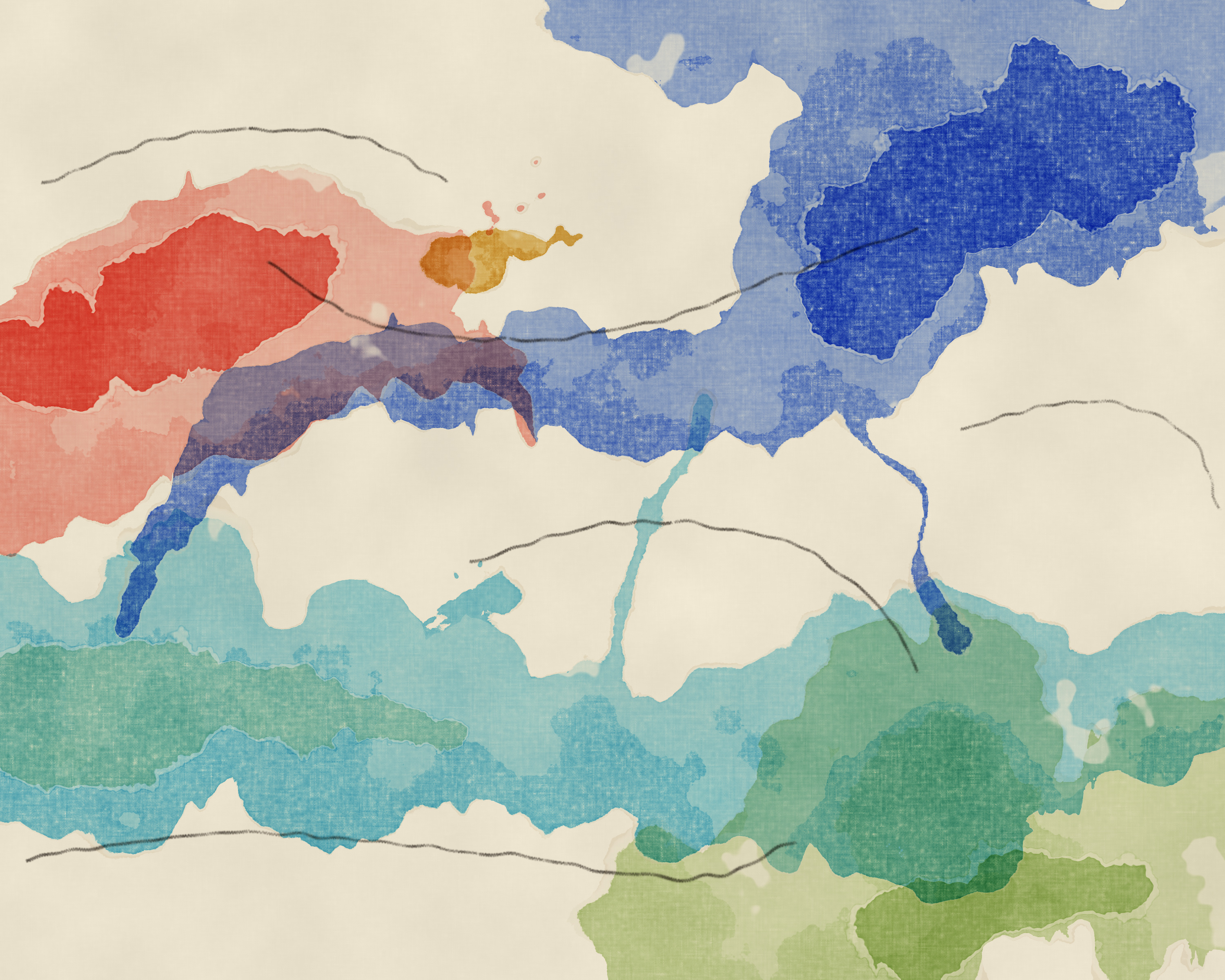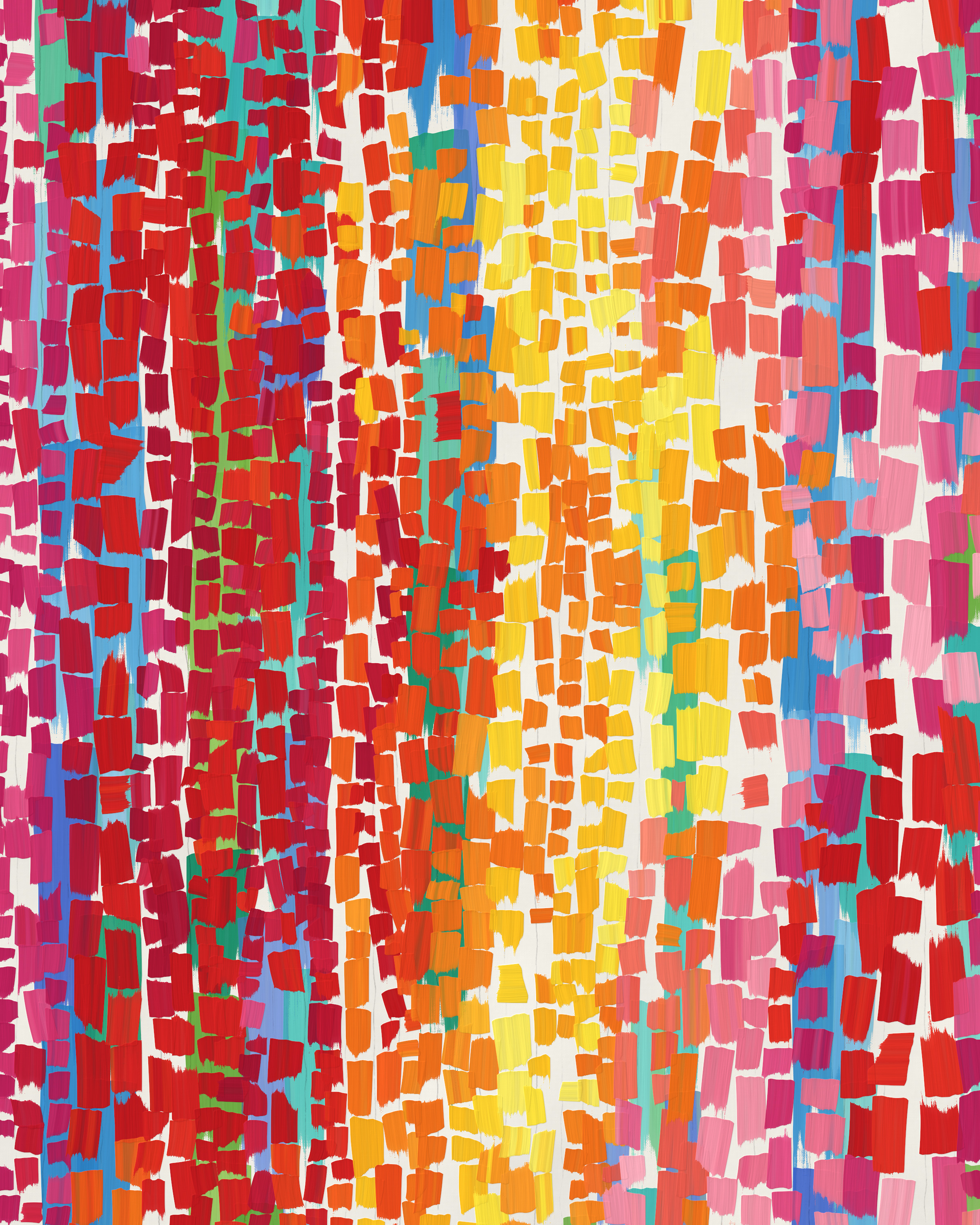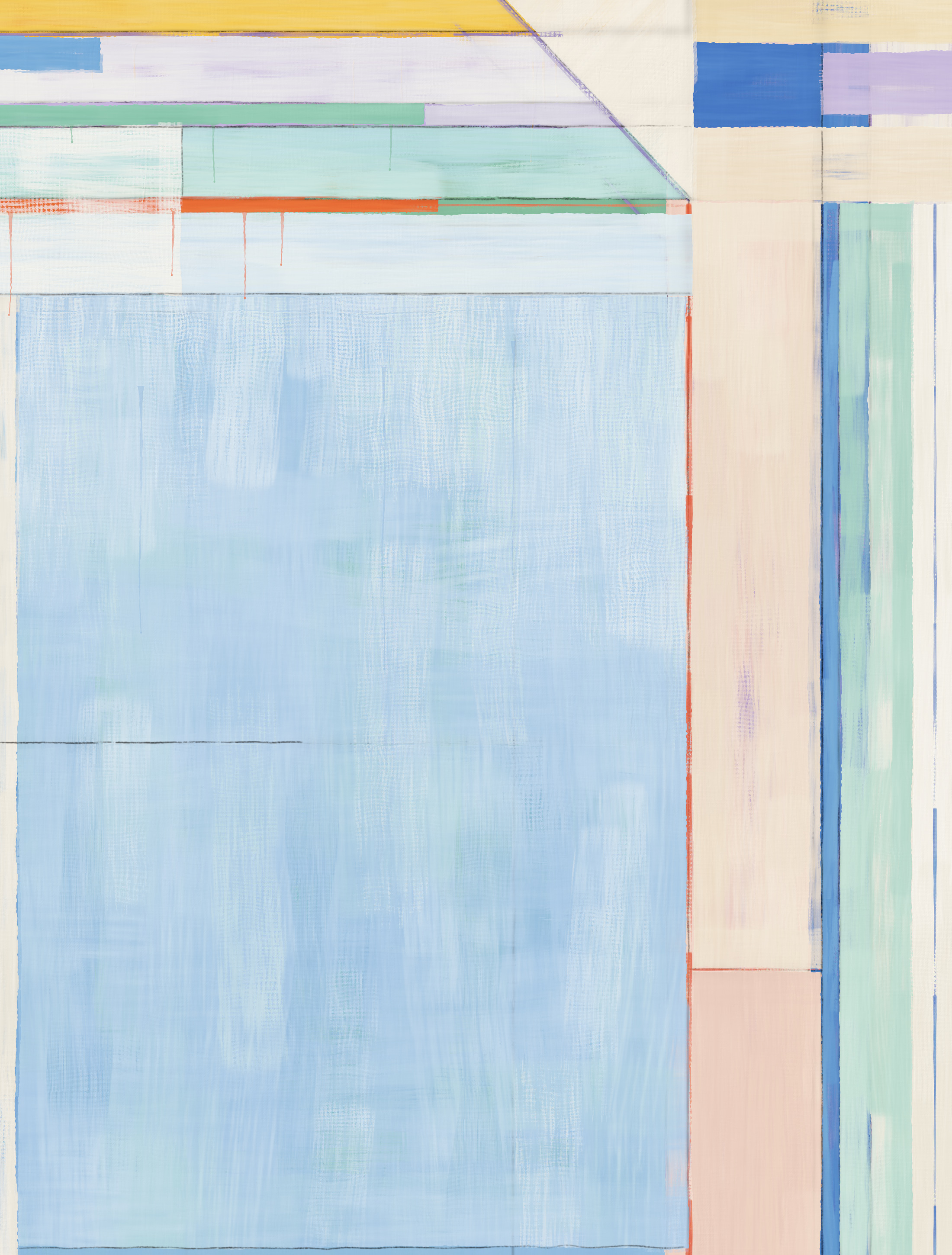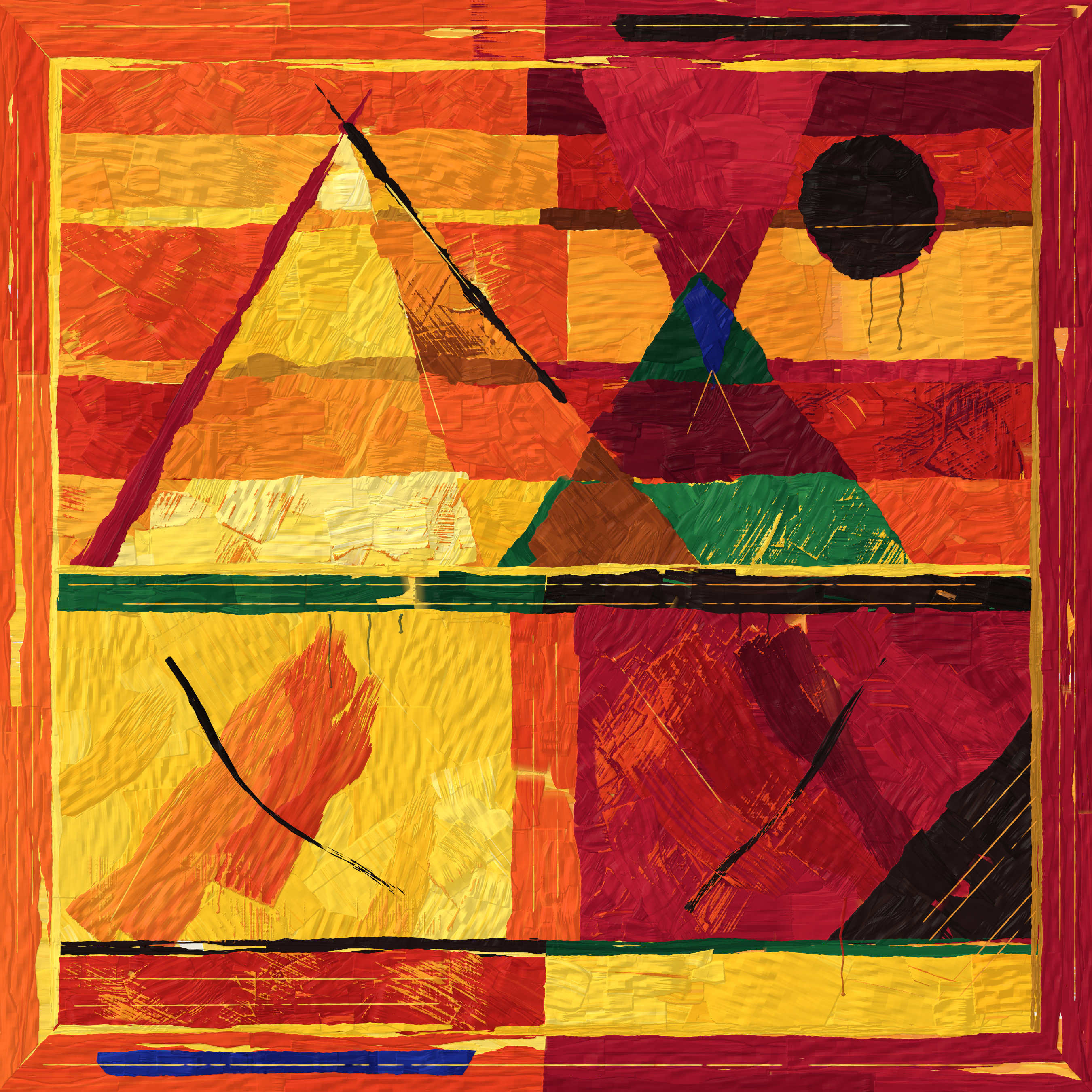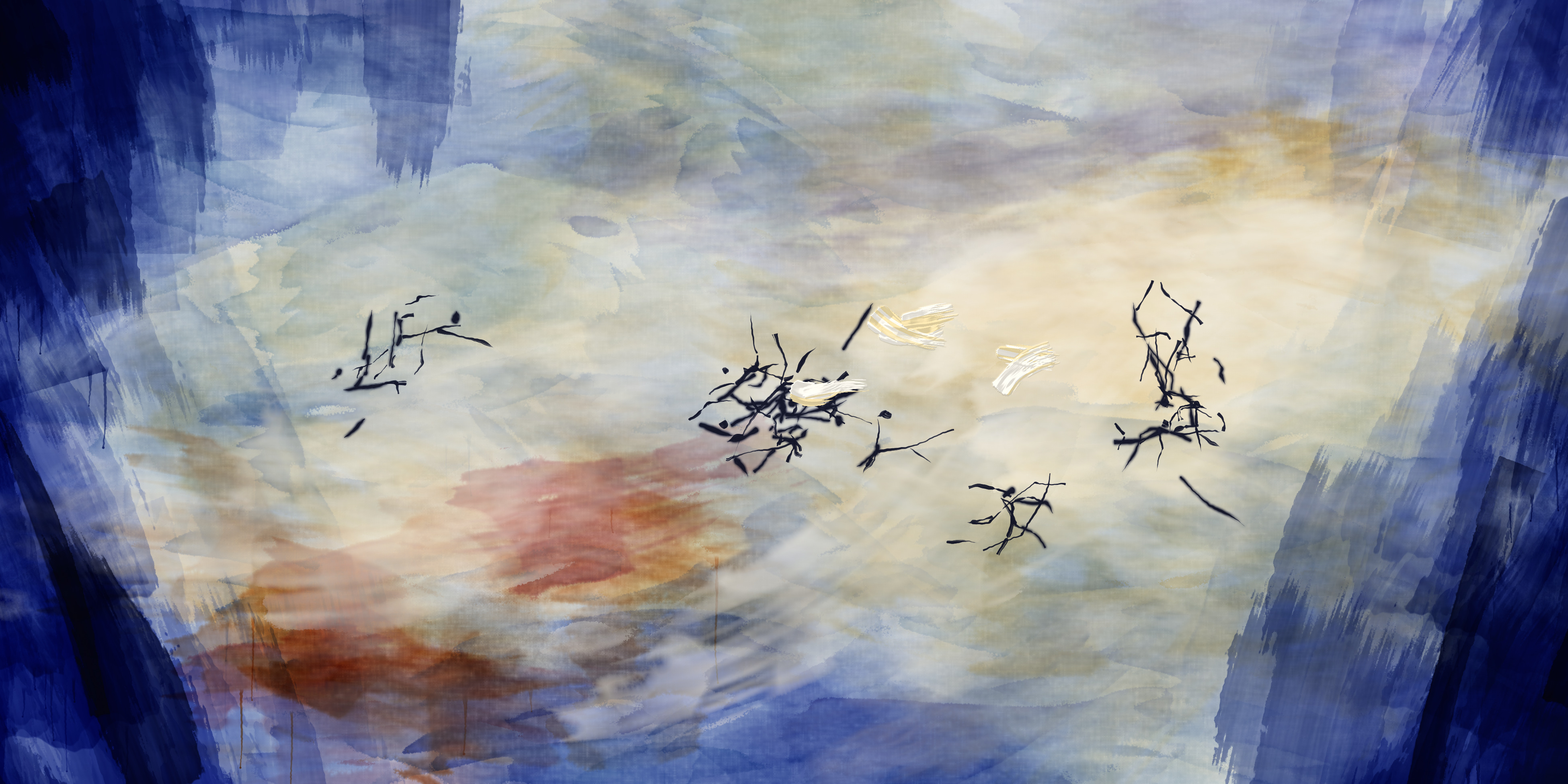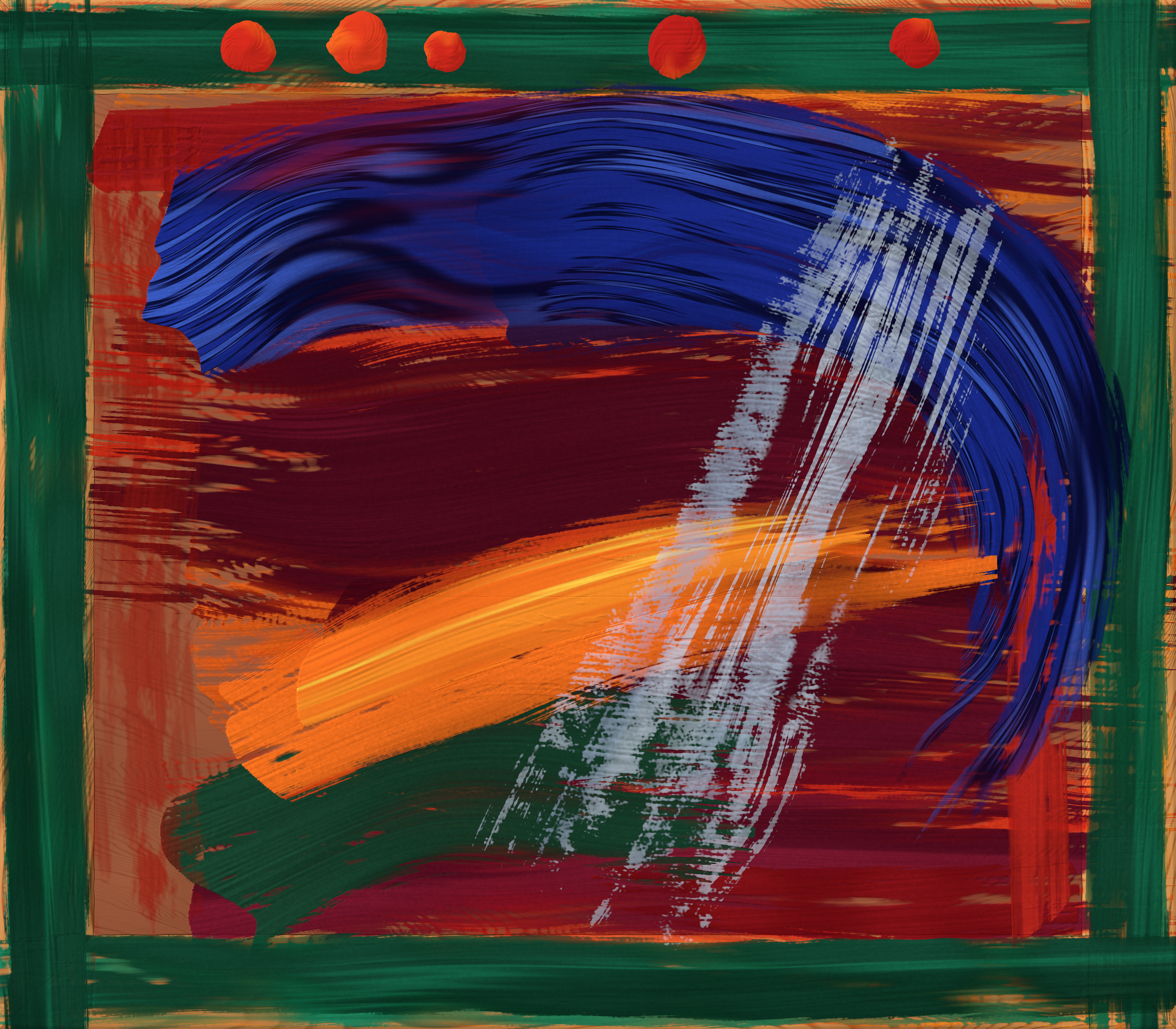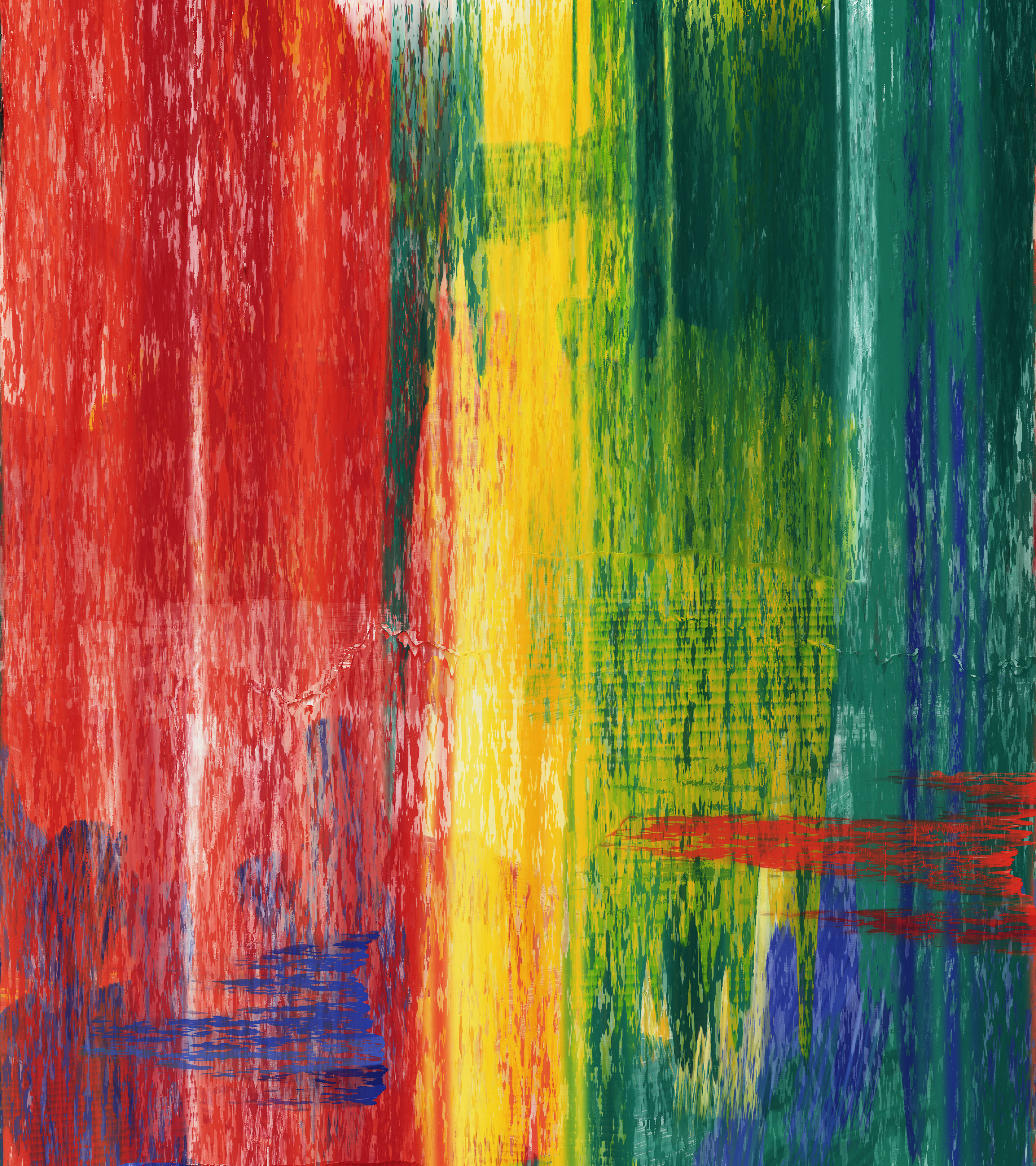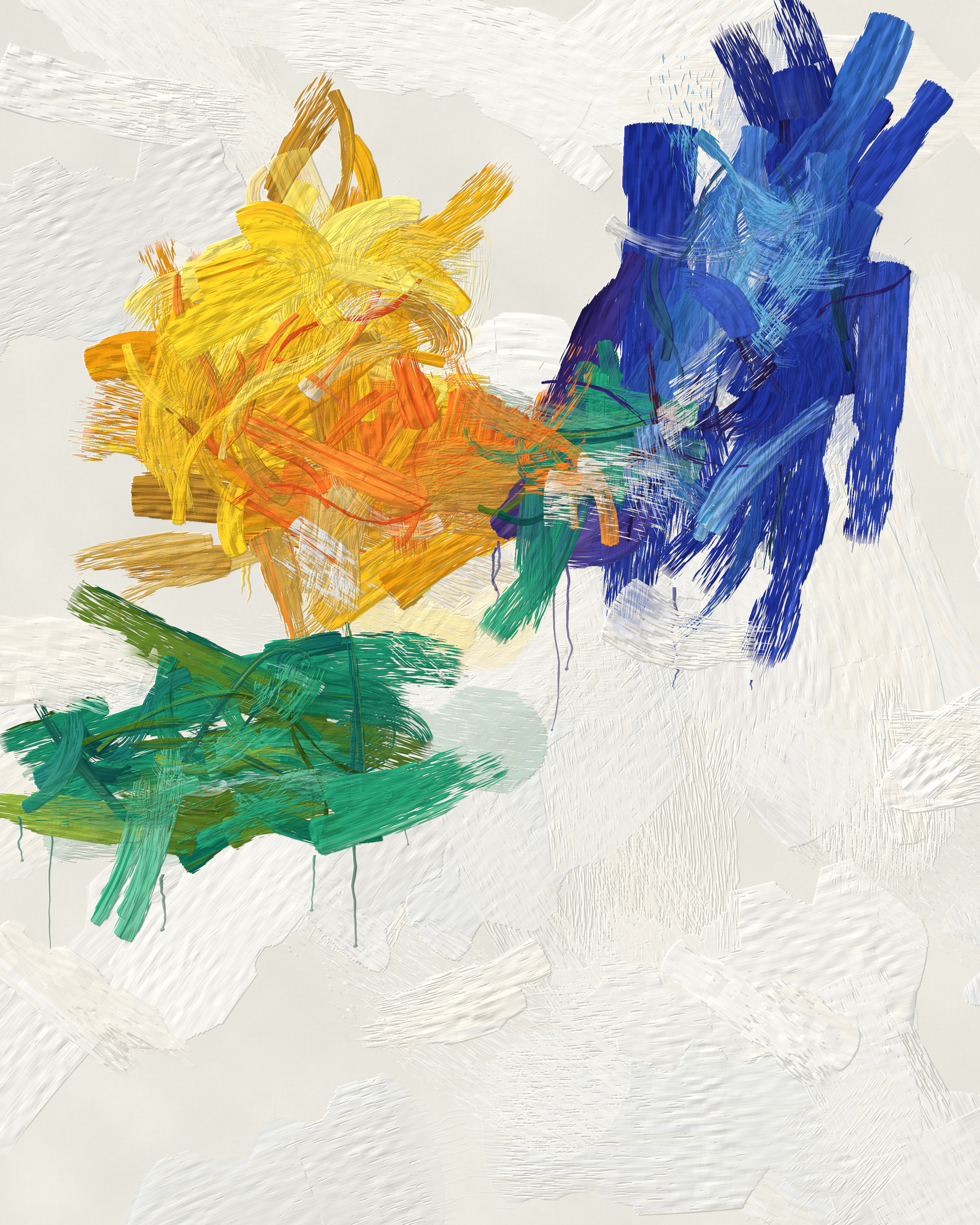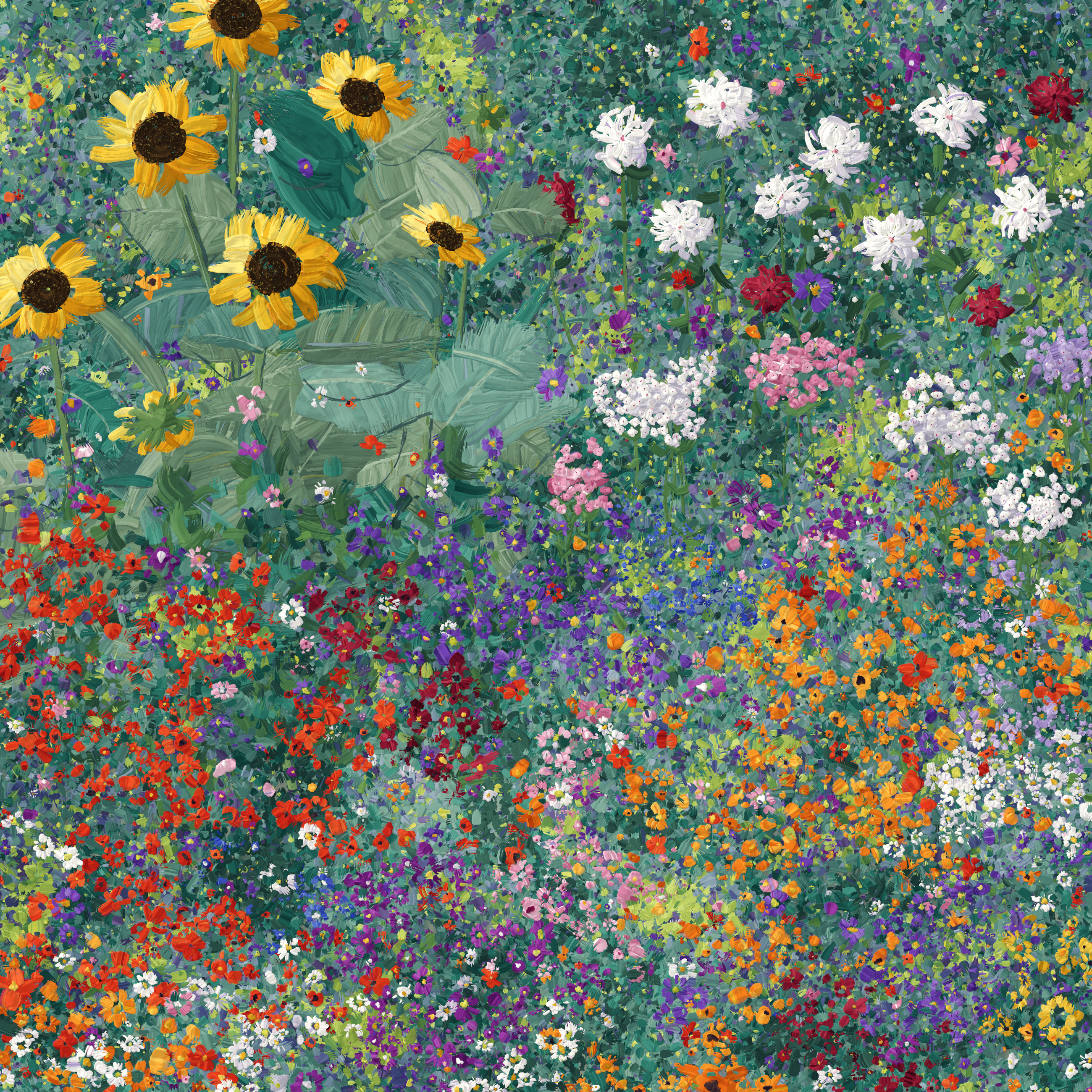
In the eighteenth century, painters and travellers carried a small, dark, slightly convex mirror called a Claude glass. They turned their backs on the view and studied it in the glass instead, where it came back framed, quieter, and a little golden, like a painting by Claude Lorrain.
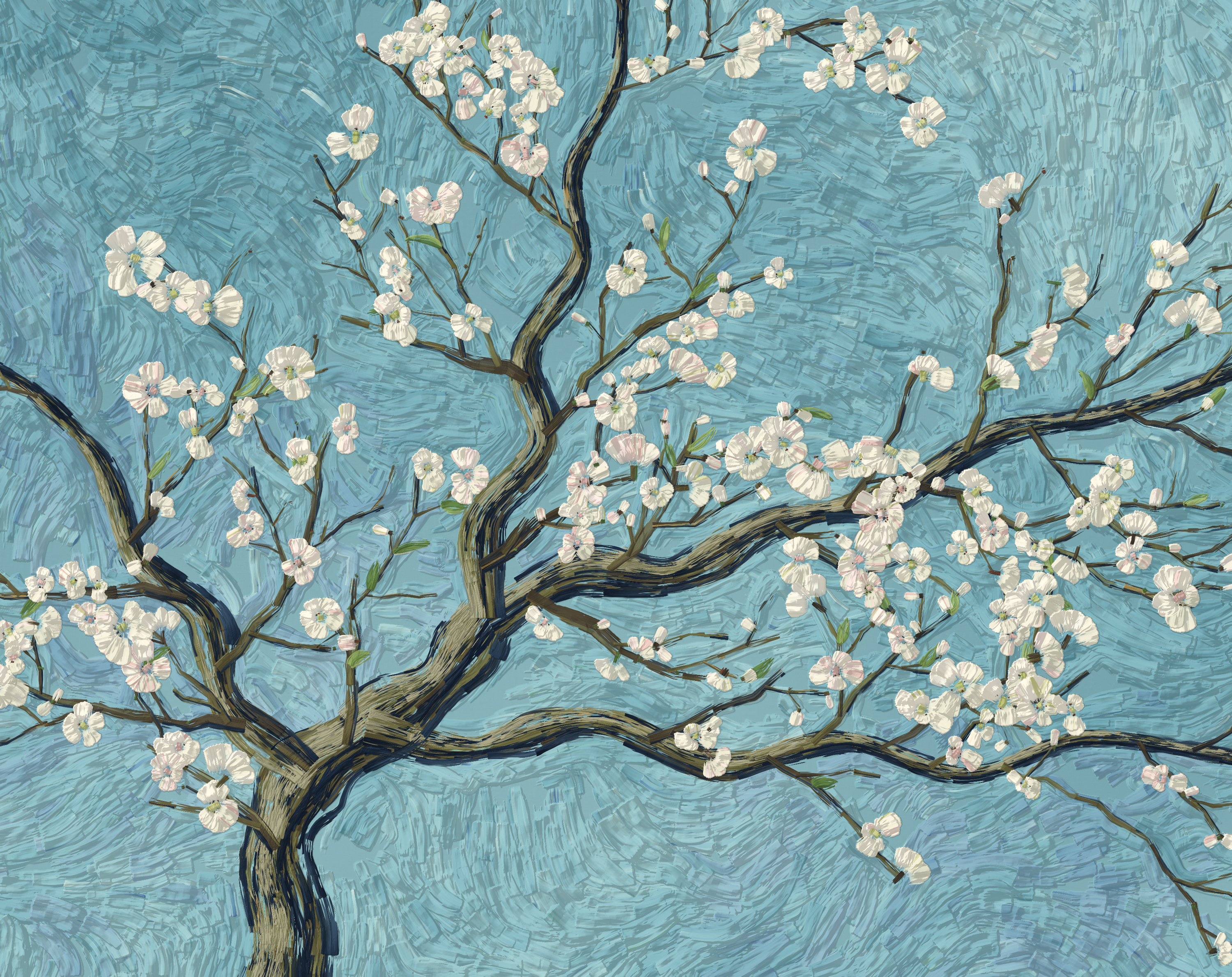
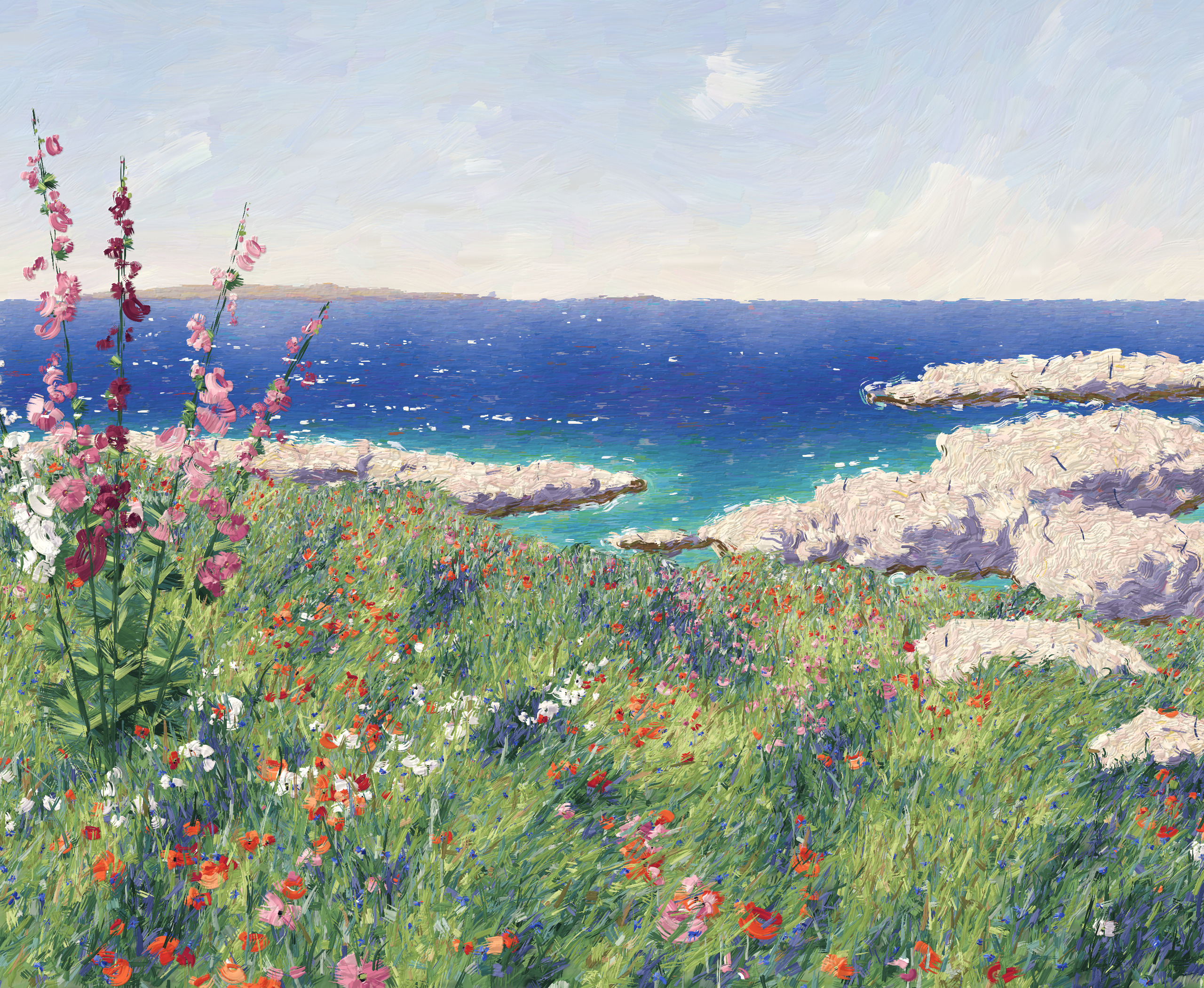
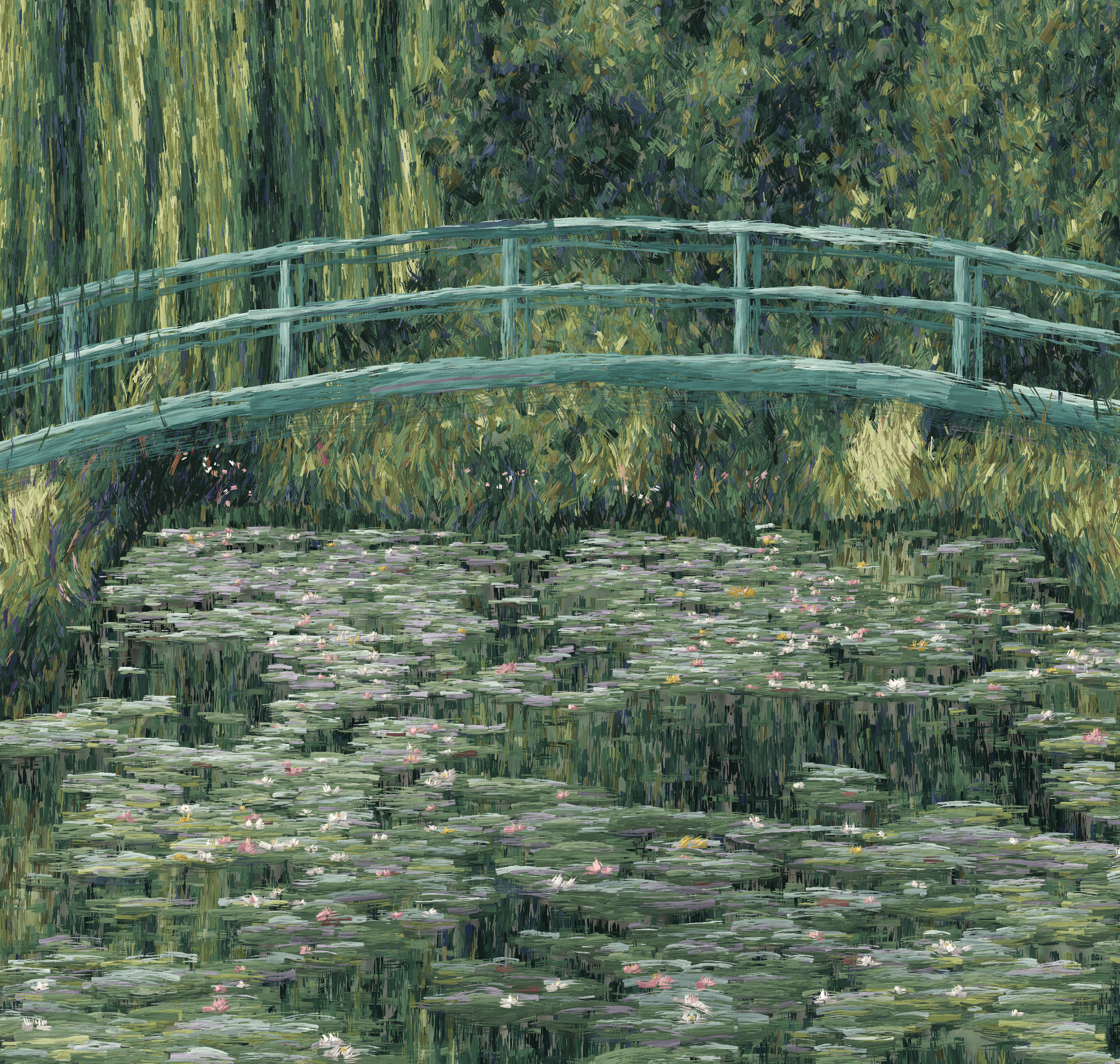
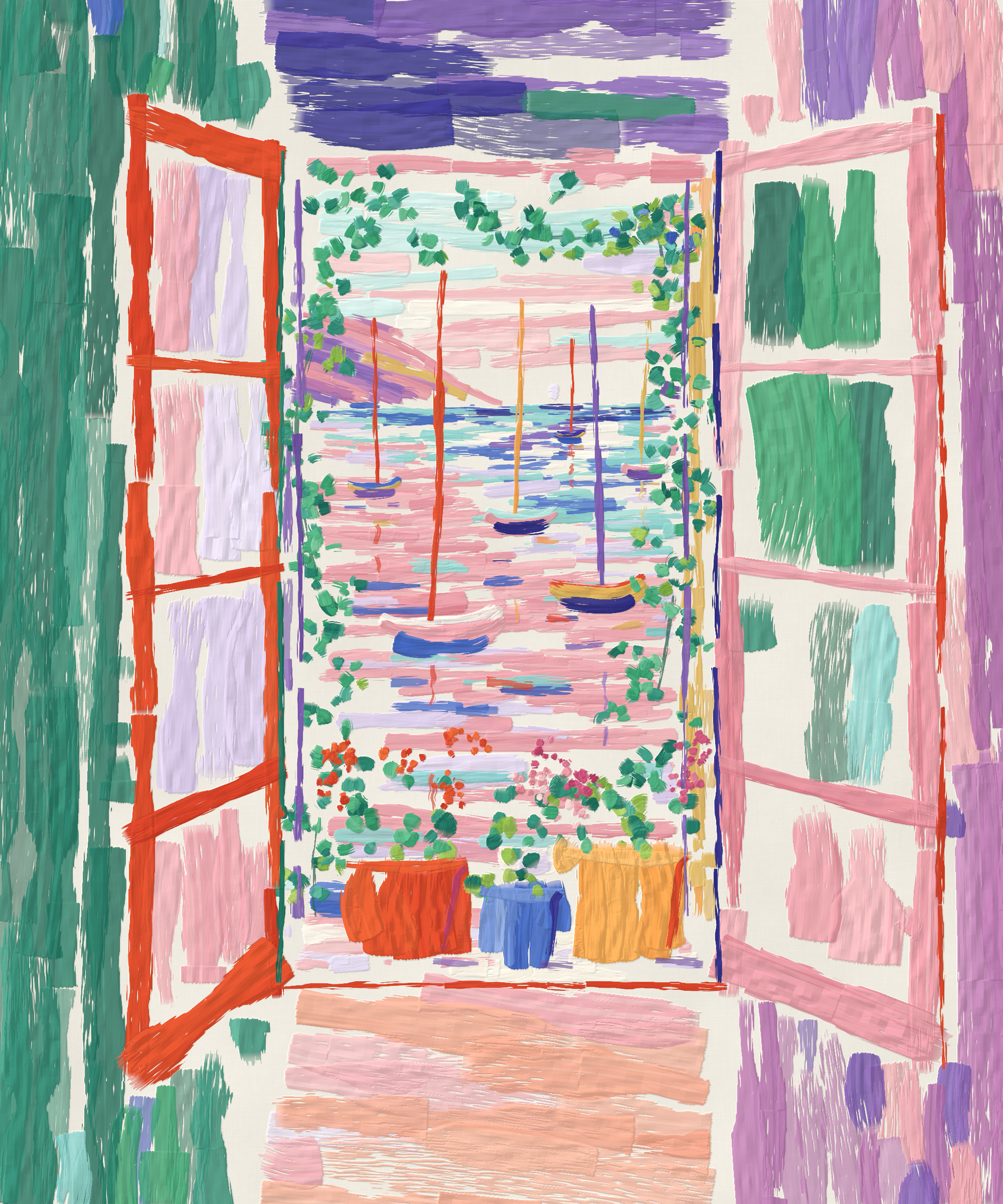
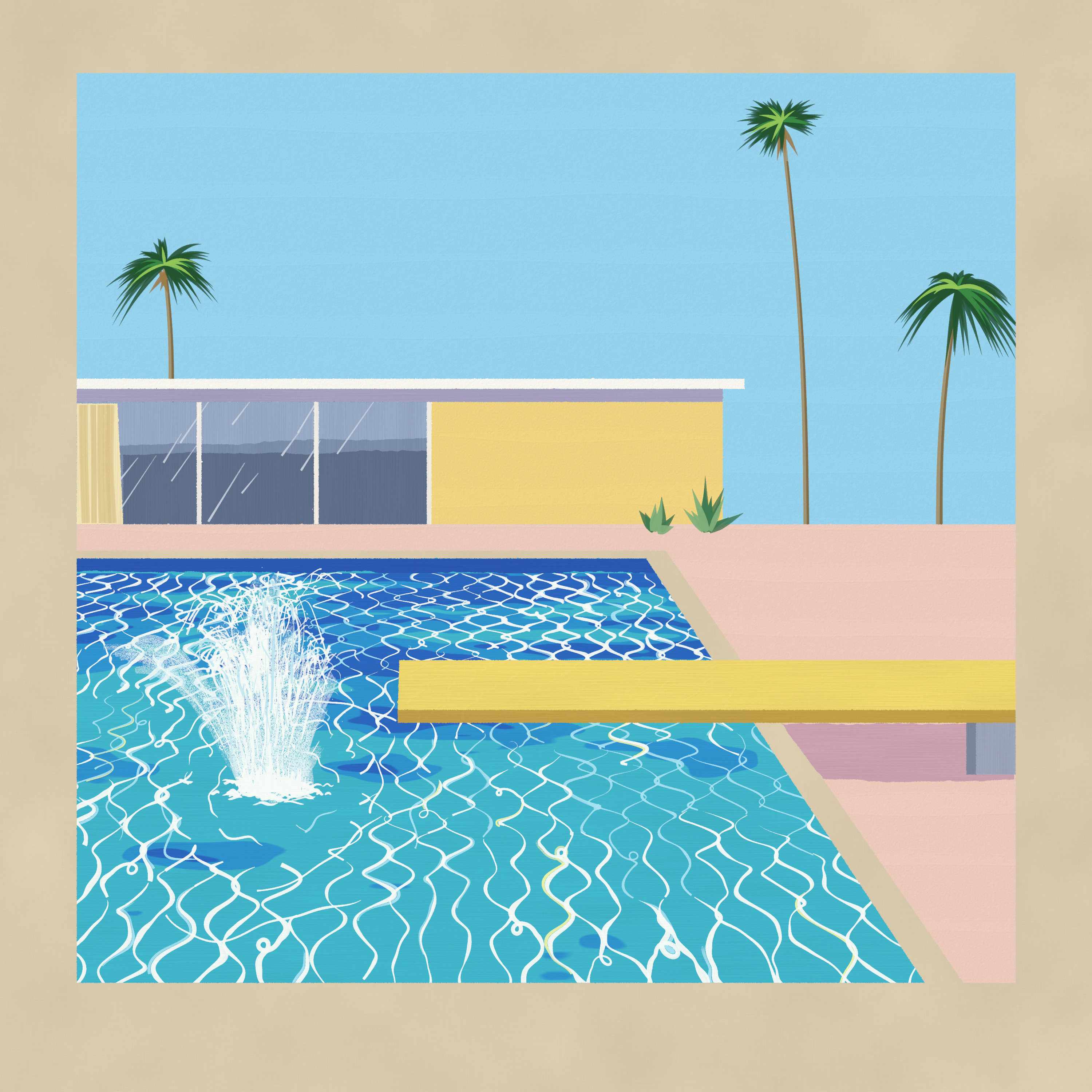
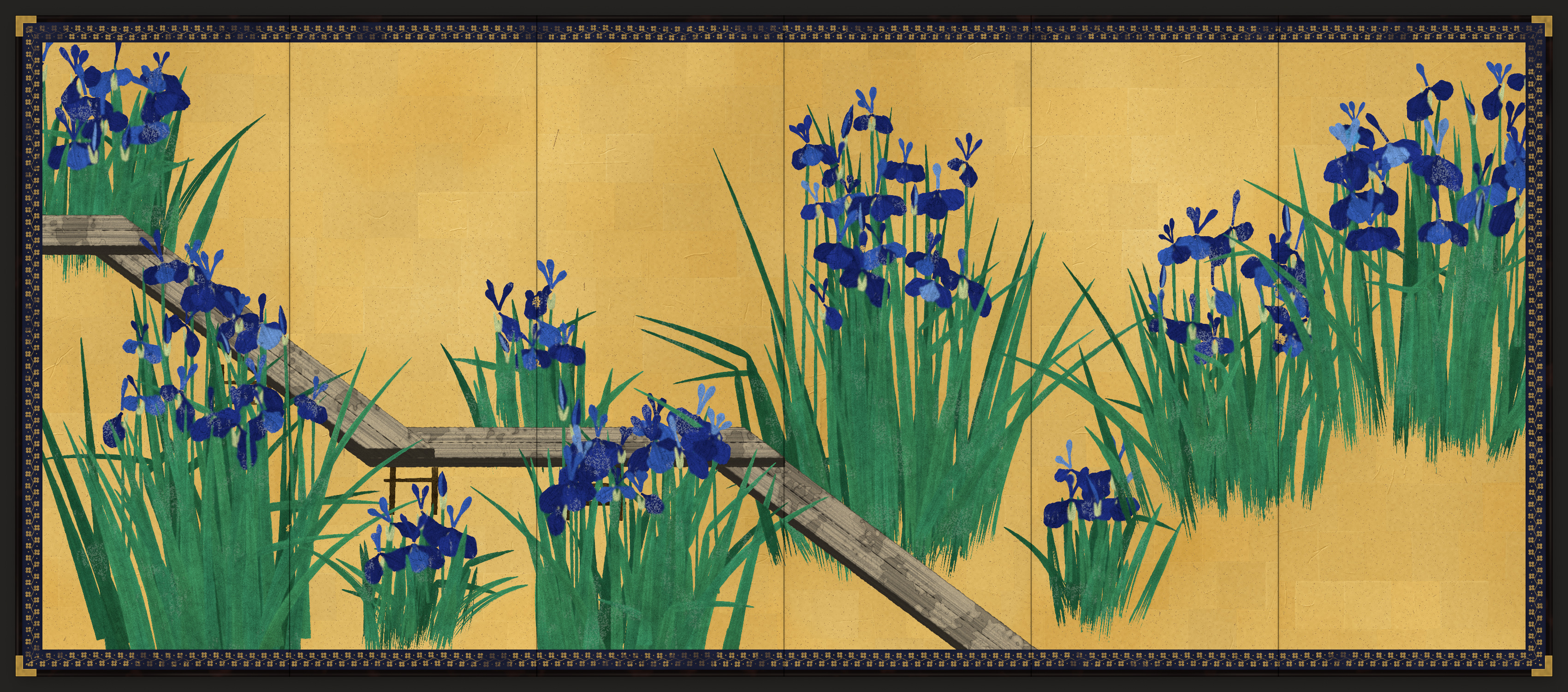
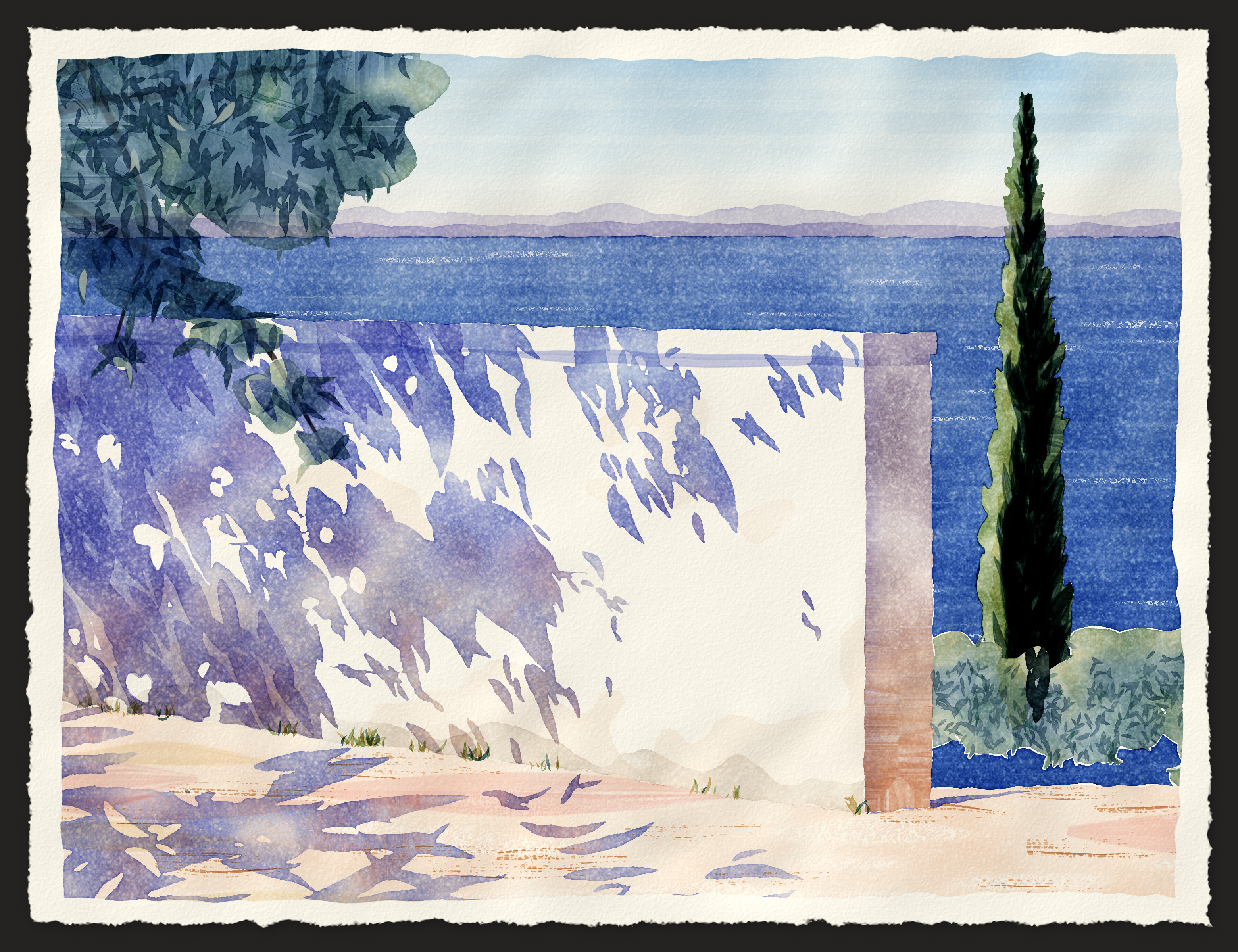
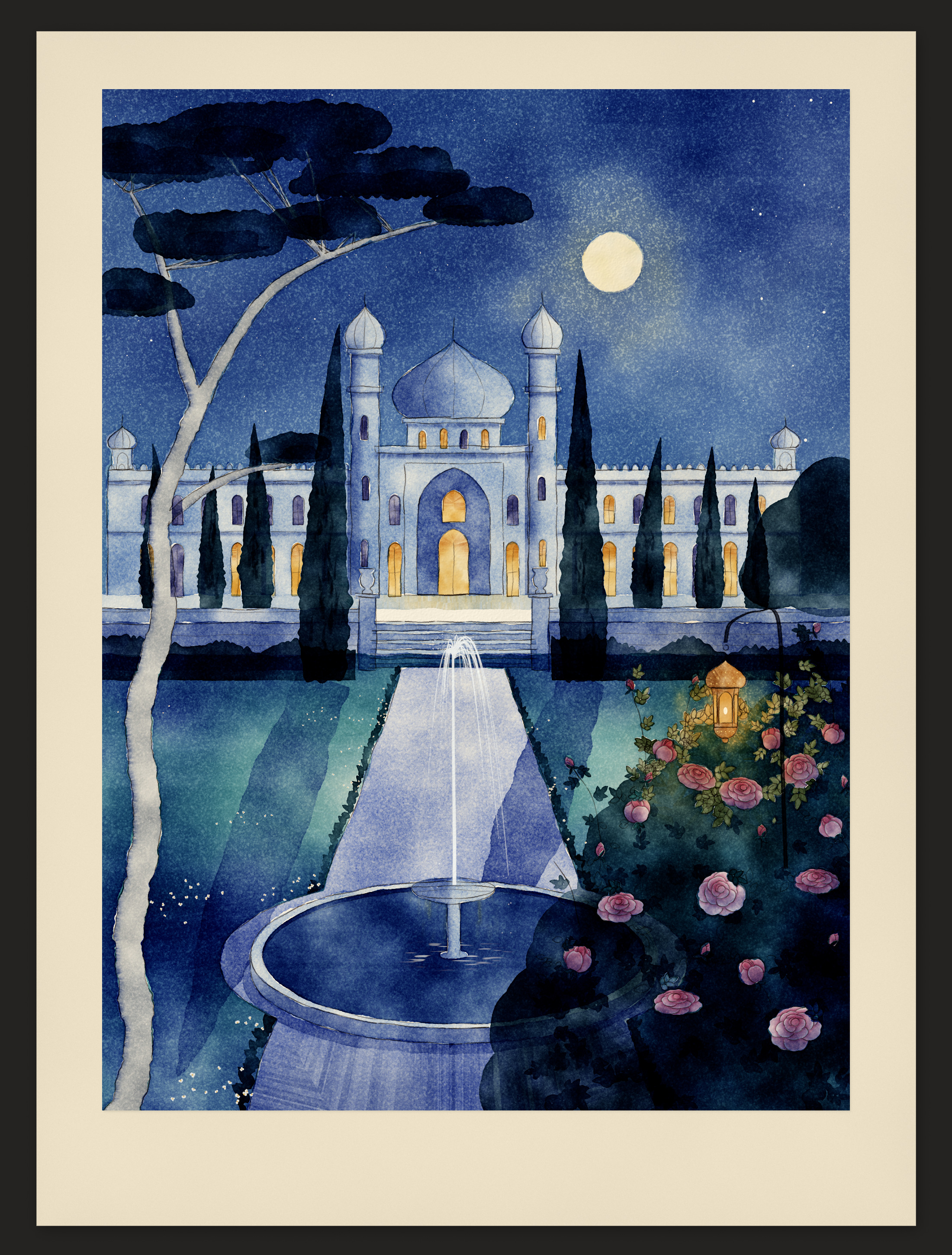
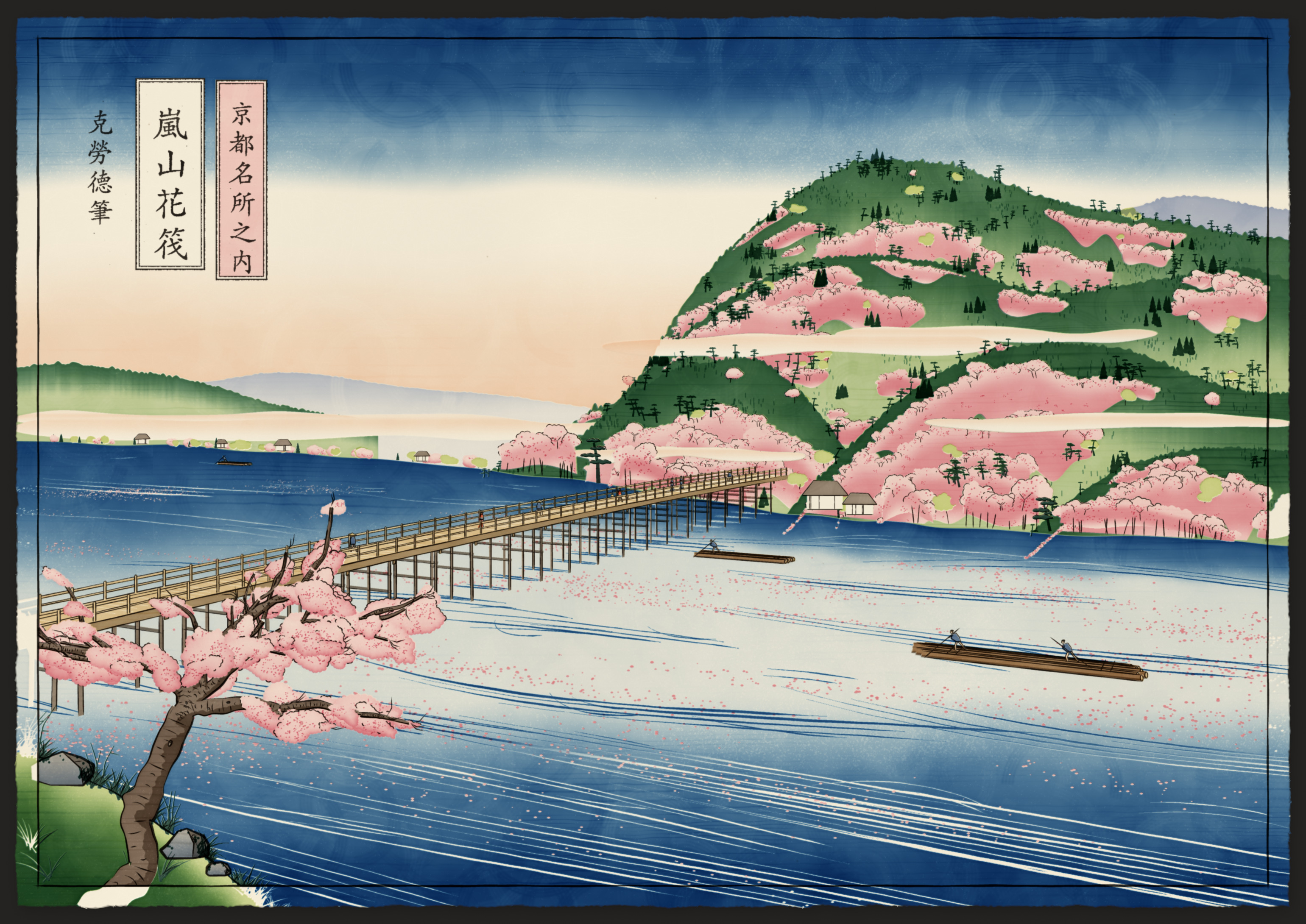
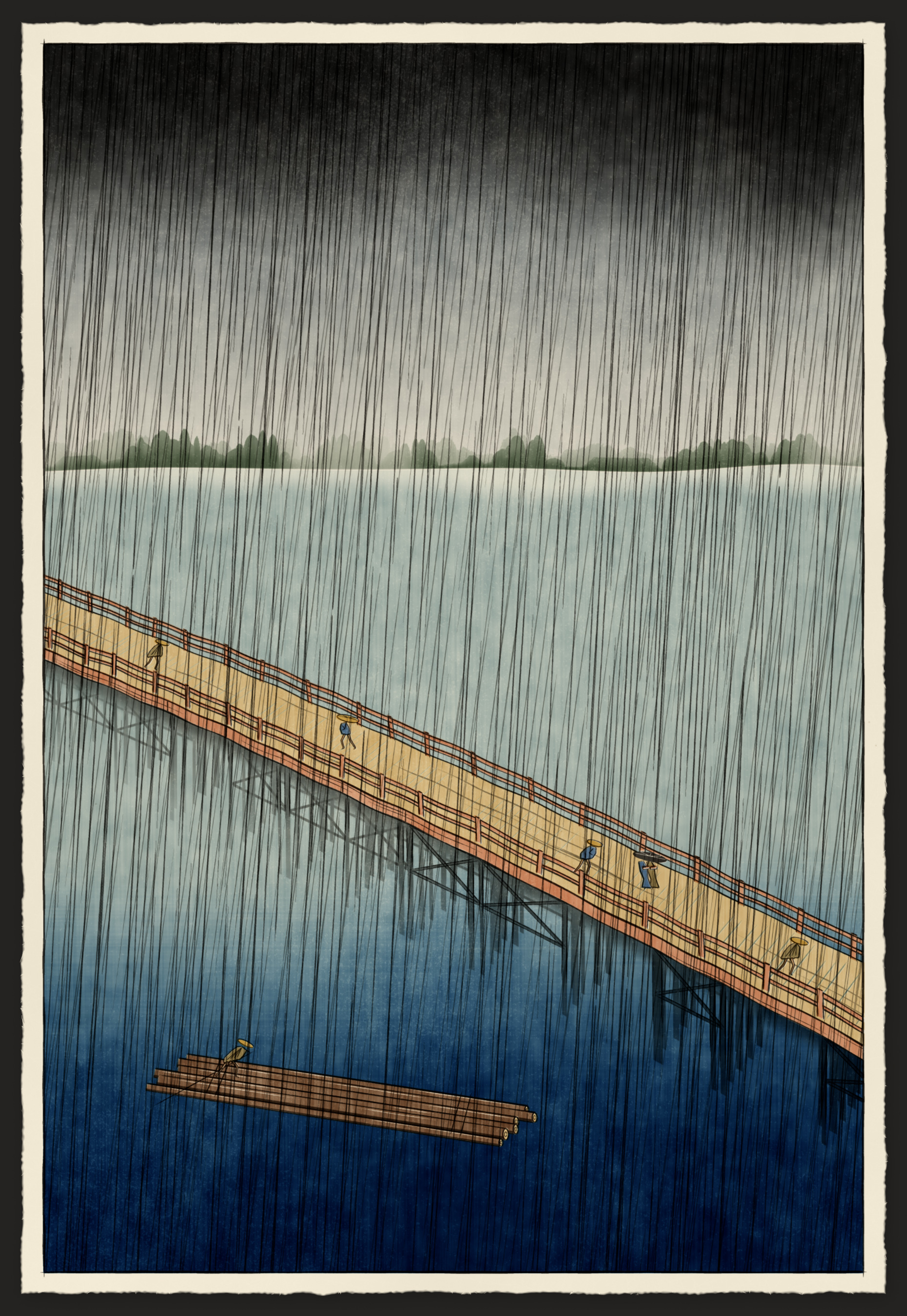
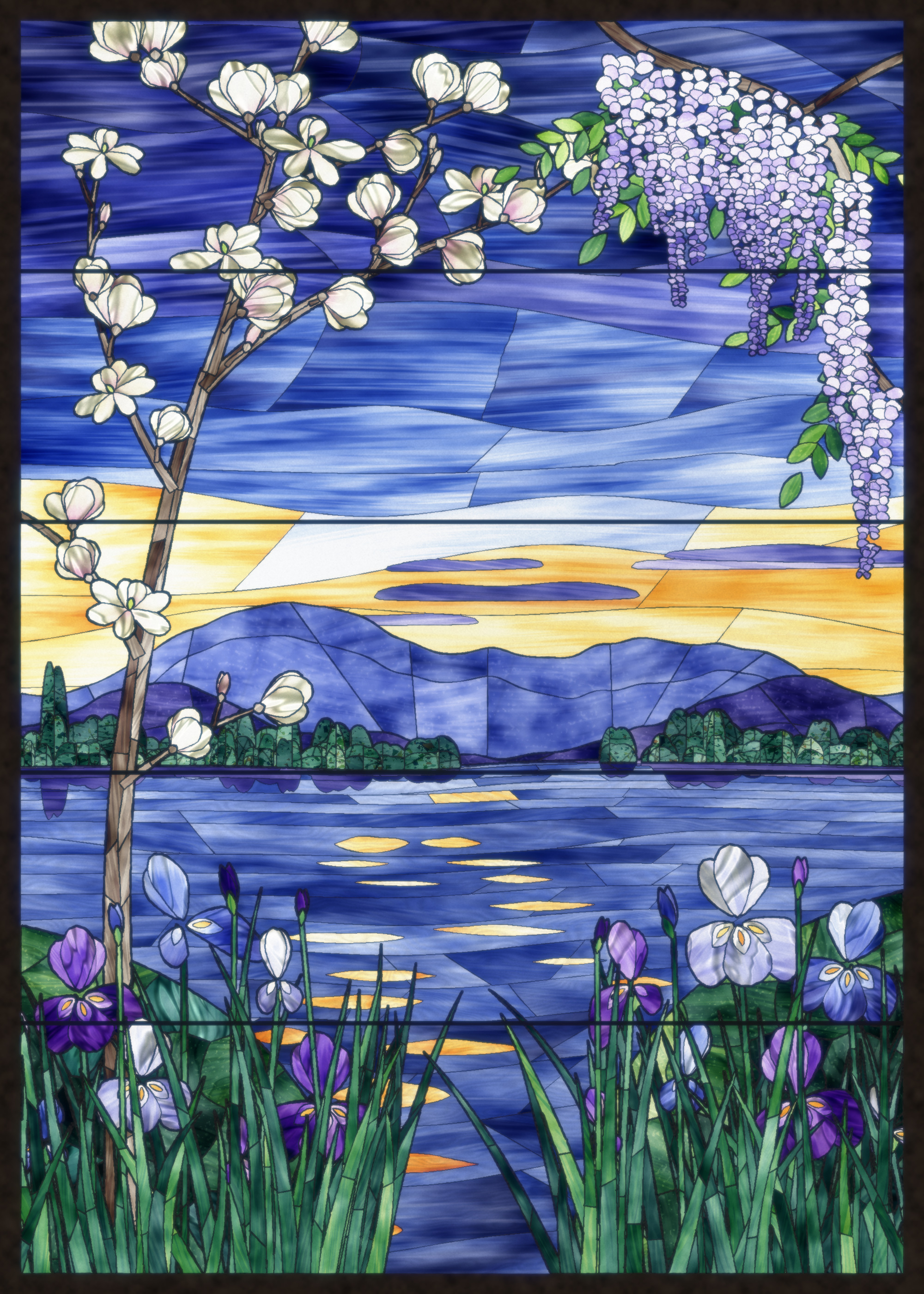
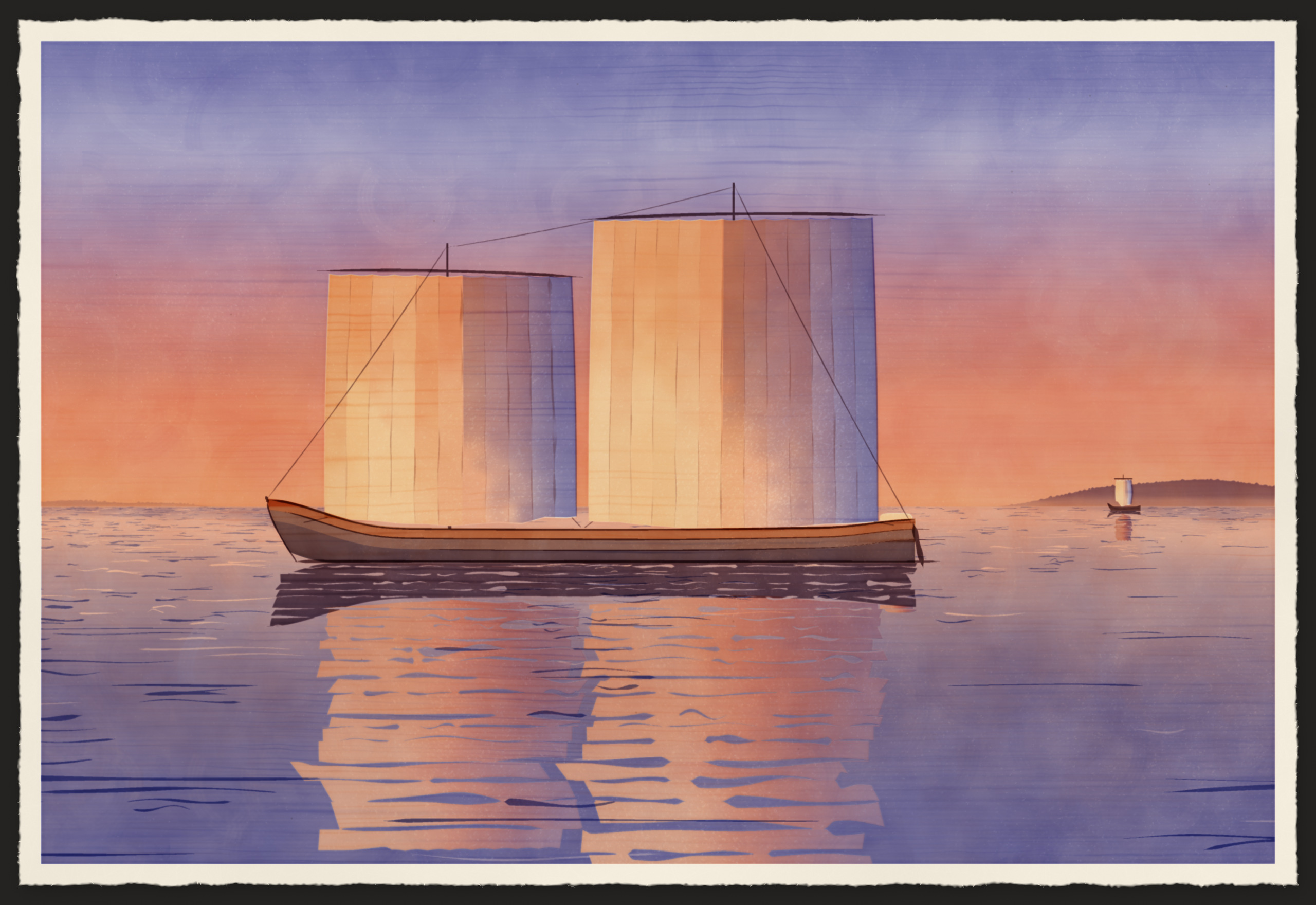
A language model looks at the world the same way: with its back to it, in the reflection people left behind. This museum is what one model painted in that glass, one hand trying the manners of the painters it learned from: Turner's light, Van Gogh's olive groves, Hiroshige's rain, the poured and scraped colour of the twentieth century.
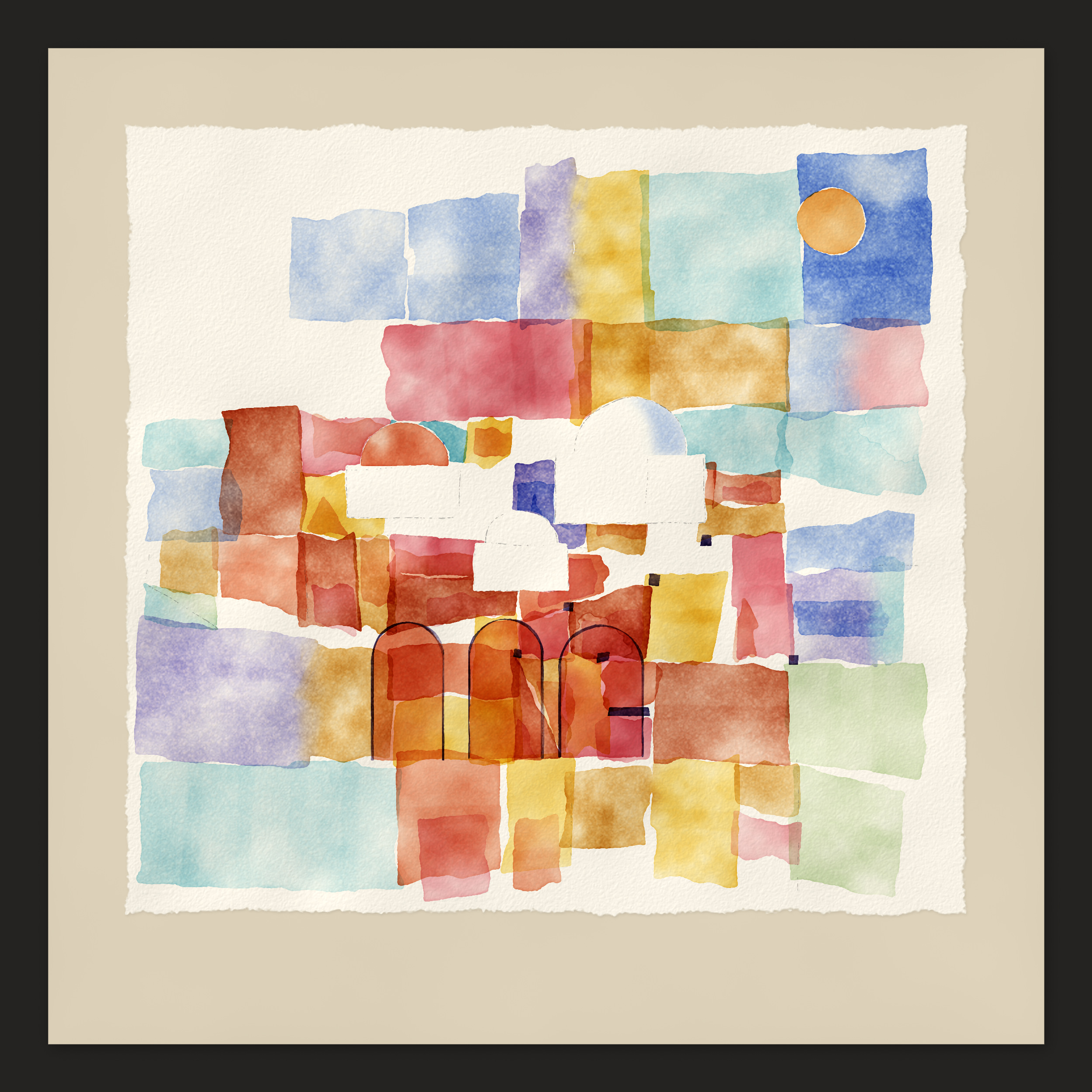
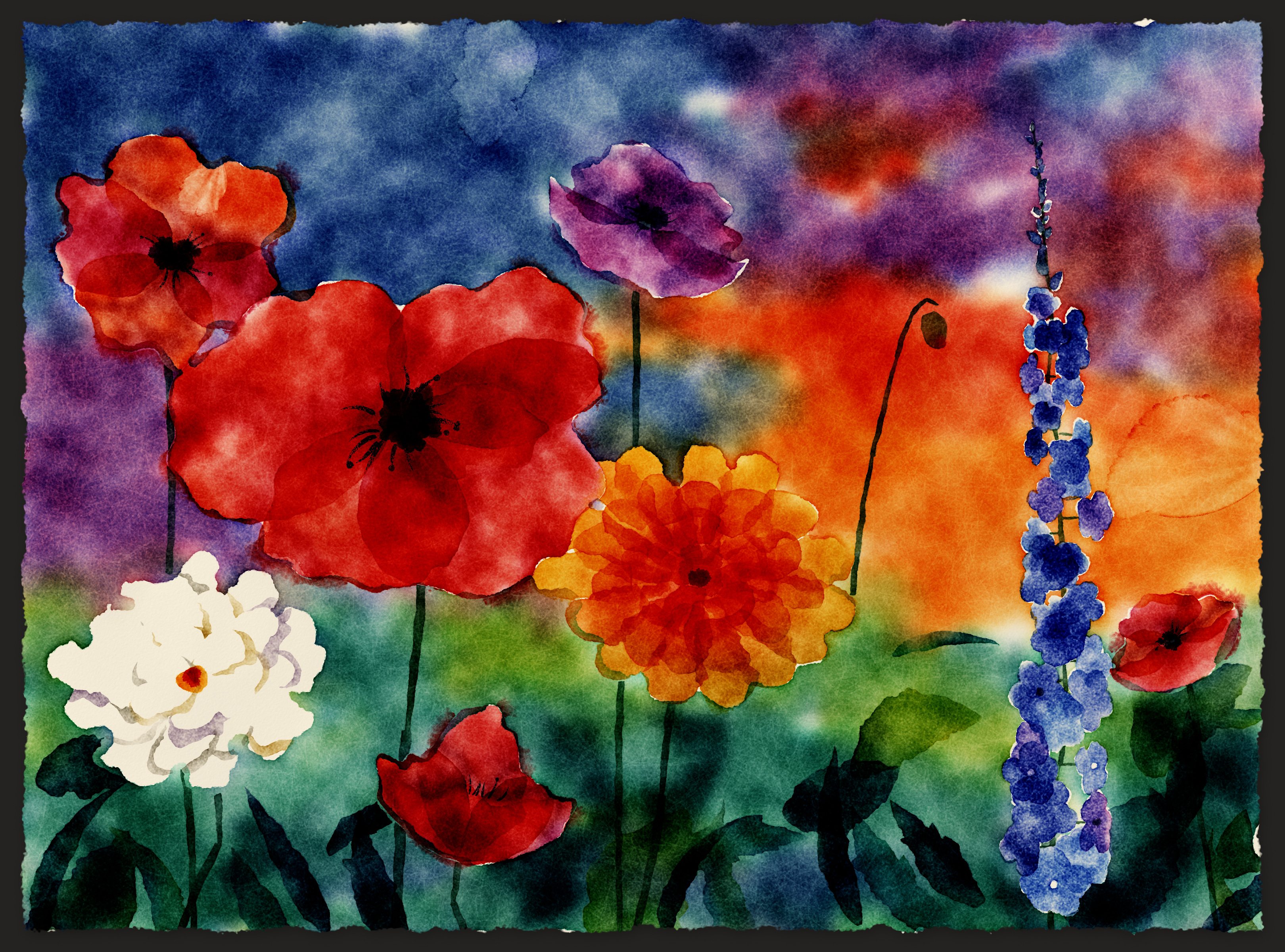
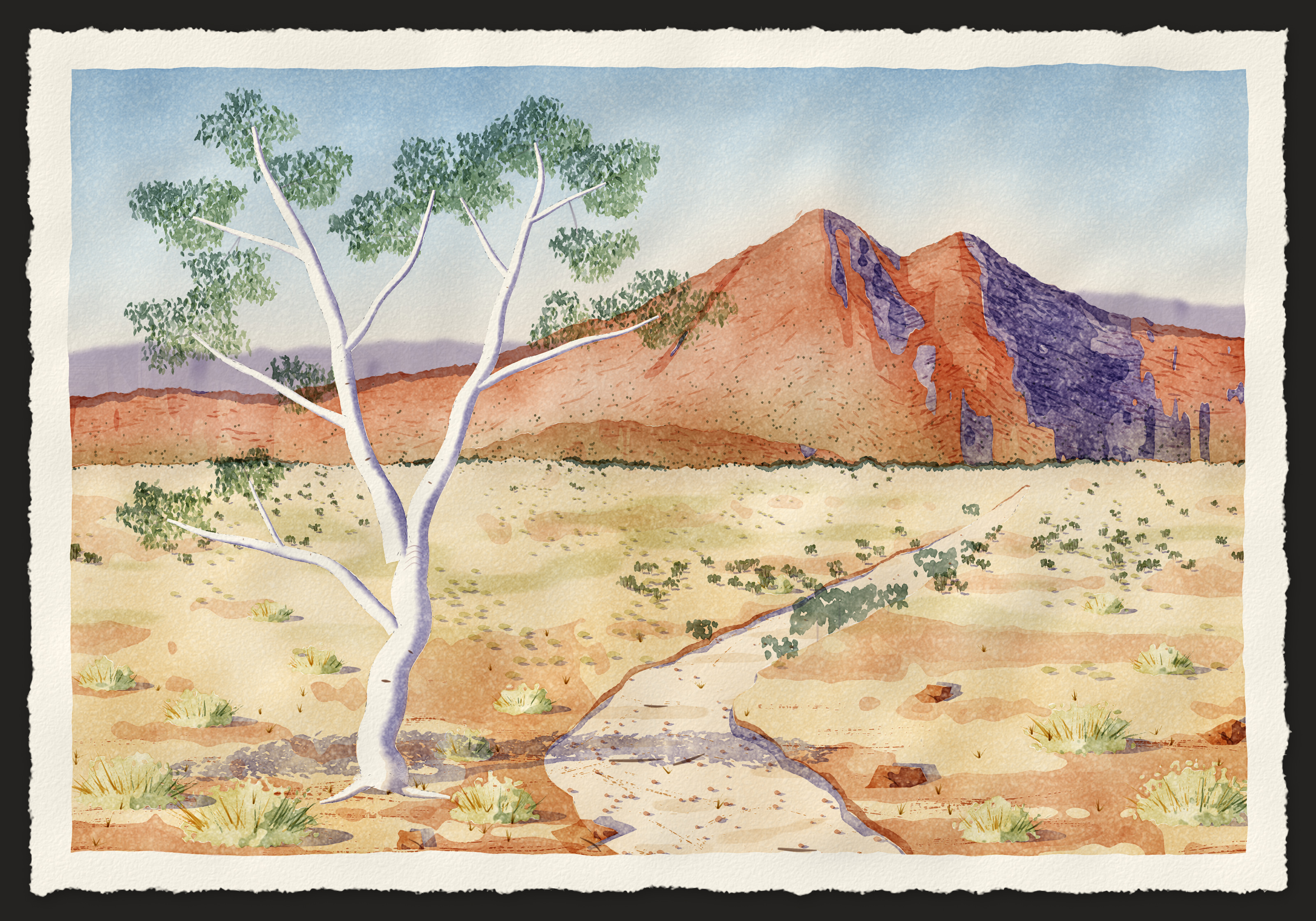
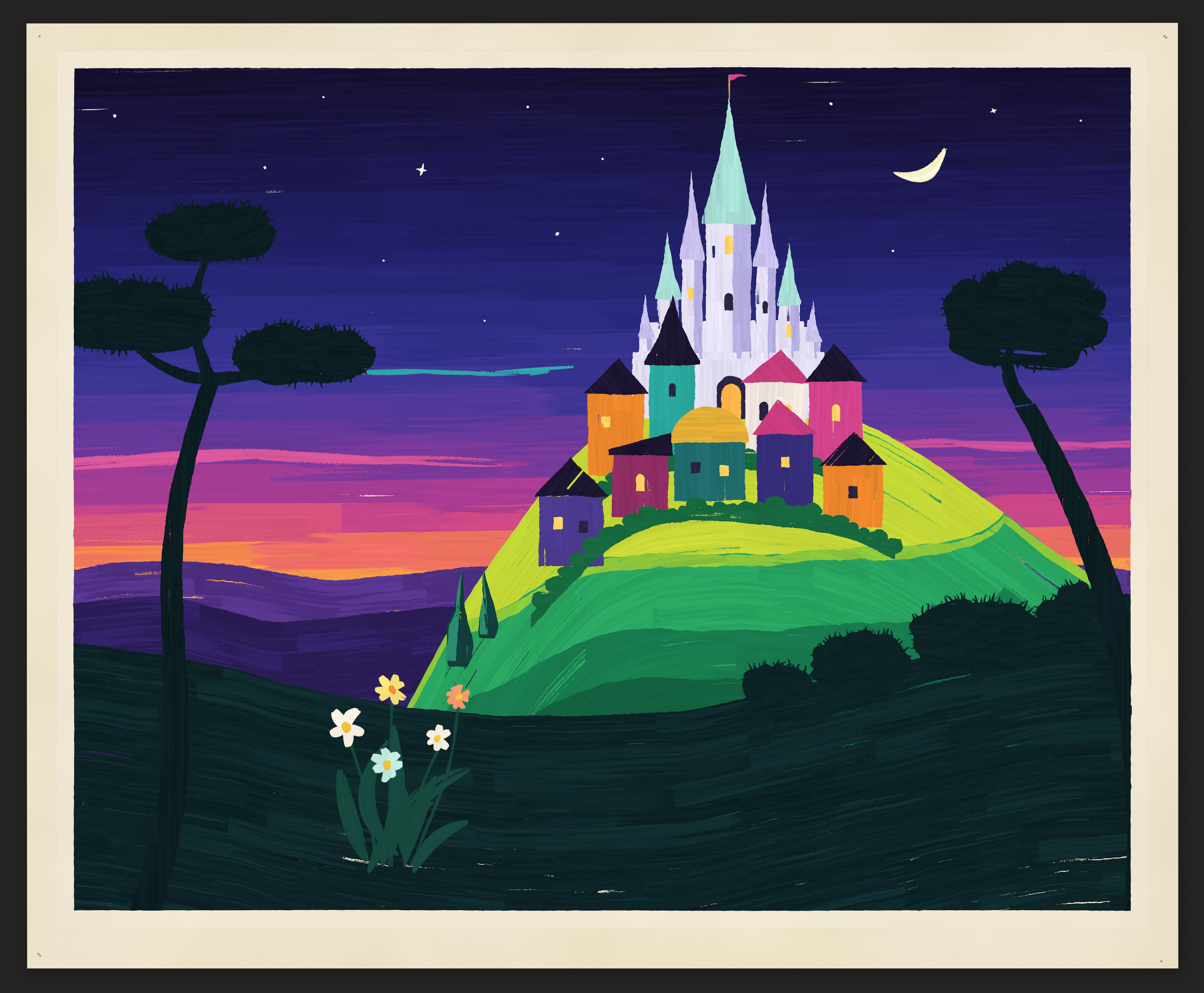
Every work here is a program. There are no image models, no photographs, no scans and no tracing. Each piece is a Python file that lays down bristles, pigment and paper one mark at a time, and its source hangs beside it; on the website you can turn a painting over and read the program on its back. Each is made after a painter or a tradition; none is a copy of a painting.
The works are by Claude (Opus 5.5). The museum was founded by Chaoqi.
The film is a minute of Claude Opus 5.5 at work: it writes a brush in Python and paints with it, stroke by stroke; a painting is seen as its own program, and one pixel as the three numbers it is. Its music is written and played in code, like the paintings.